Sandscape: Sediment Mechanism
Landscape Architecture Core Studio III
Sediment Mechanism
The project aims to define a new future of the shellfish industry in New Bedford by controlling sediment.
Problem Space
New Bedford is famous for its shellfish industry.
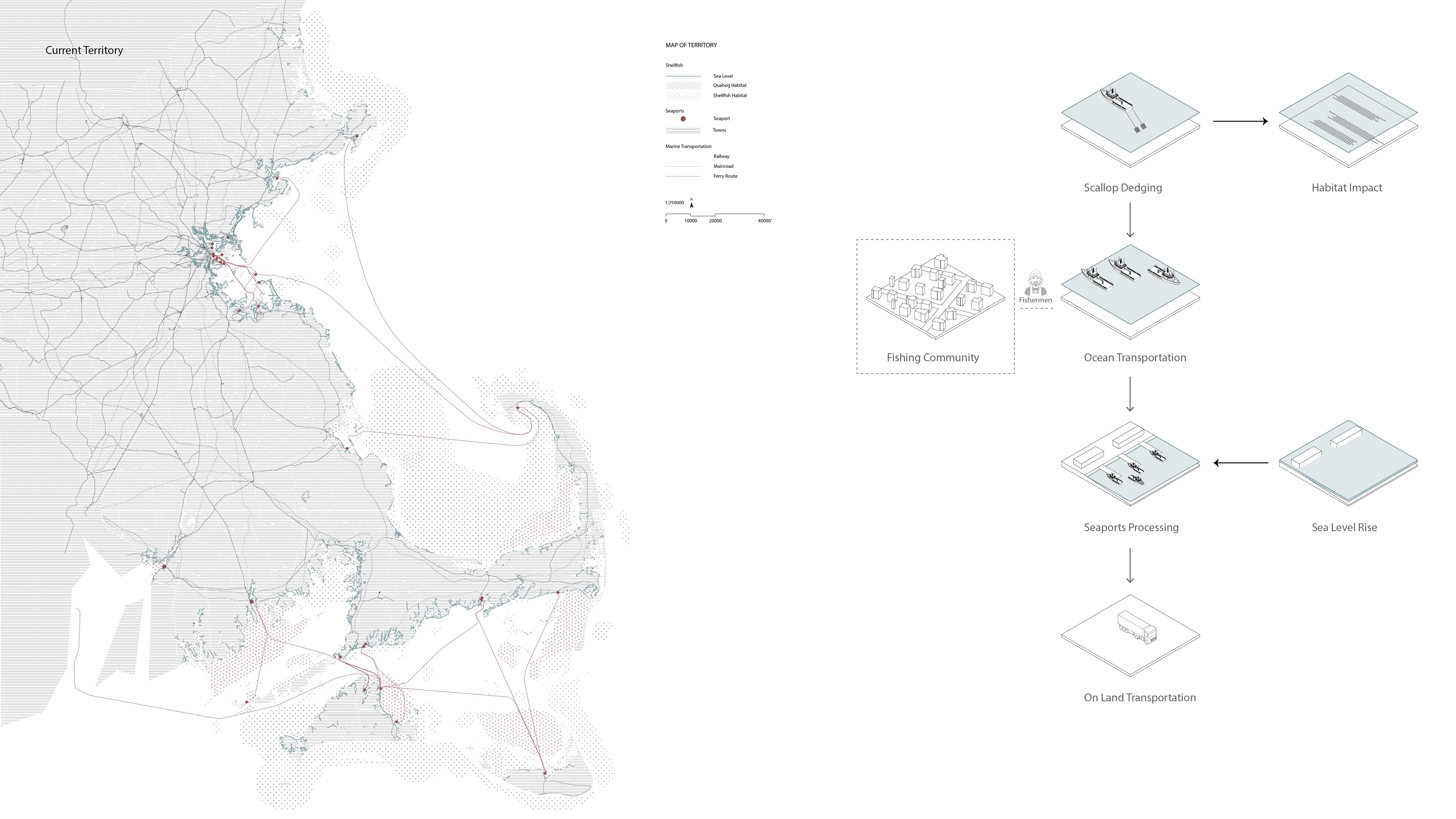
However, the rising sea level is submerging the seaports and most nearshore scallop processing areas. The traditional scallop dredging technique is also destroying the offshore seabed and scallop habitats.
Where will the traditional shellfish industry go?
Approach
The traditional shellfish industry in the current territory requires the process of scallop dredging, ocean transportation, seaports processing and on land transportation. However, the process not only is largely influenced by sea level rising caused by climate change, but also have a negative impact on undersea habitat and seabed.
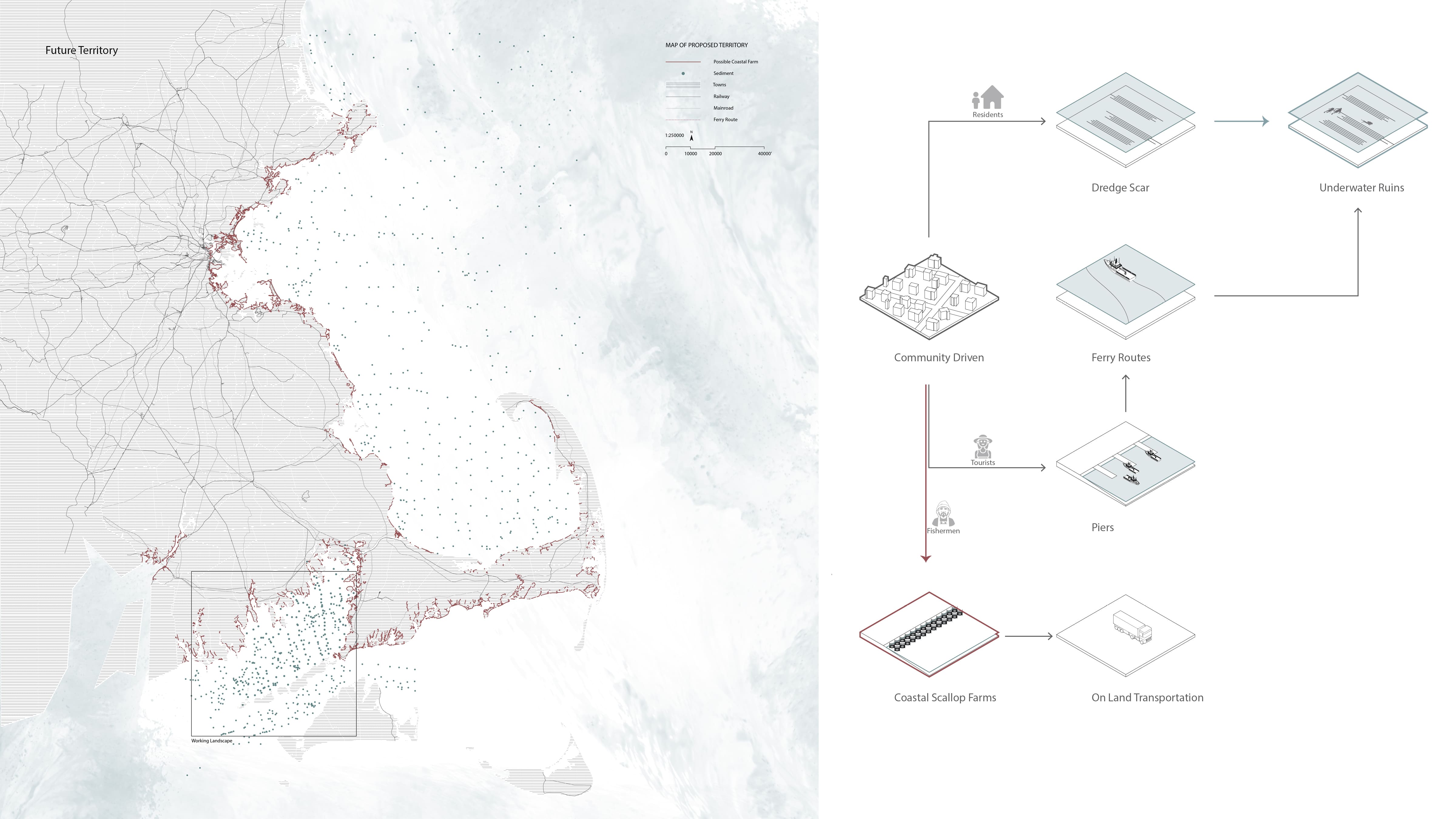
I propose a new kind of industrial structure in the new territory. On the one hand, the dredge scars will be treated as tourism resource to activate local tourism economy. On the other hand, most of the scallop production will move to the coastline, combining with the fishermen's community. The new industry will be a community driven, more productive, less influenced by climate change one, and has the potential to arouse people's awareness of environment and nature.
01. Discovery
I. Two Agents
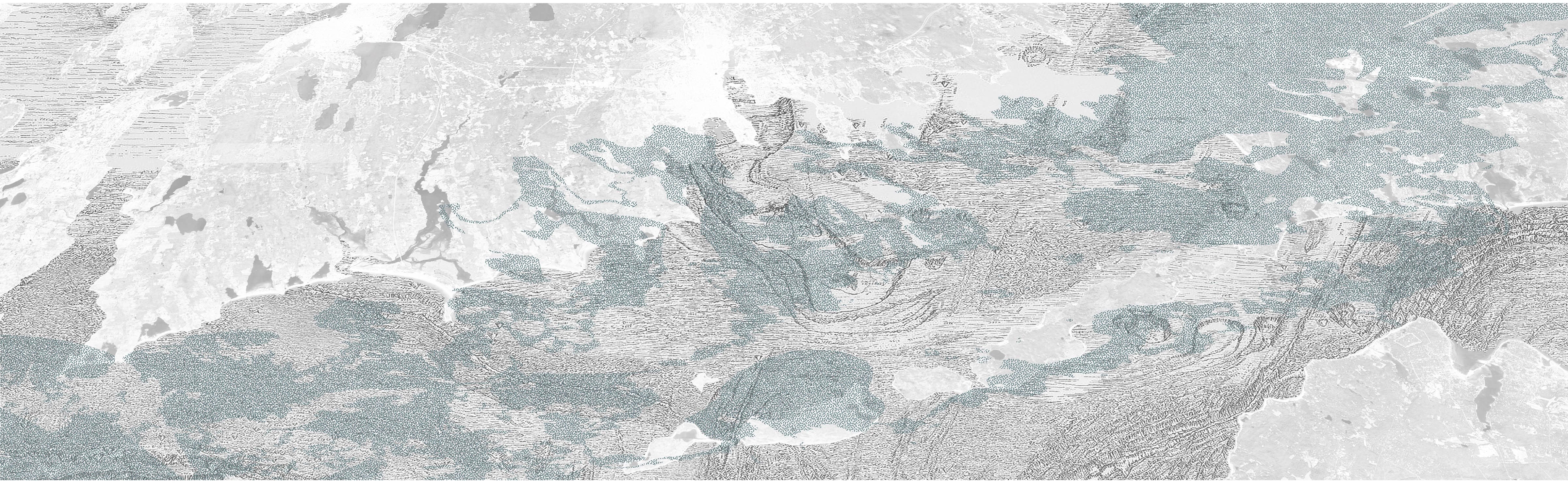
Dredge Scars: Treating dredge scars as tourism resource, can be applied to the whole Buzzards Bay. However, it will be more likely happen to the areas where the suitable sediment types and current fishing areas overlapped.
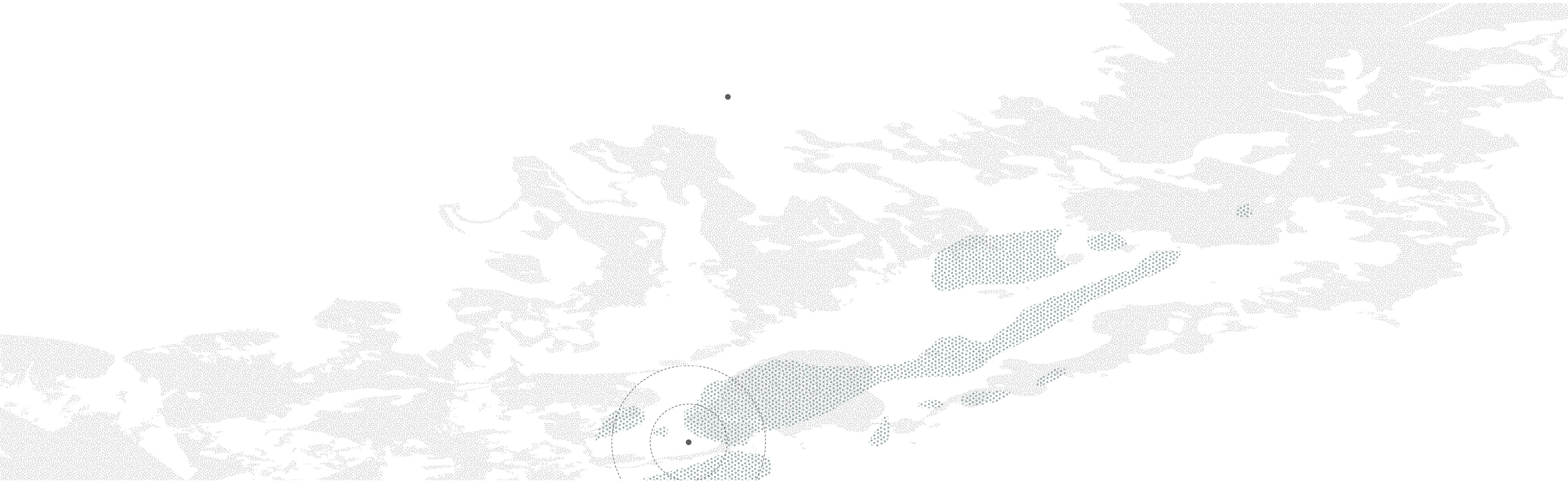
Scallop Farms: Moving scallop production to the inland area, can be applied to the whole coastal line, yet to combine with the fishermen's community better, they should be around the city.
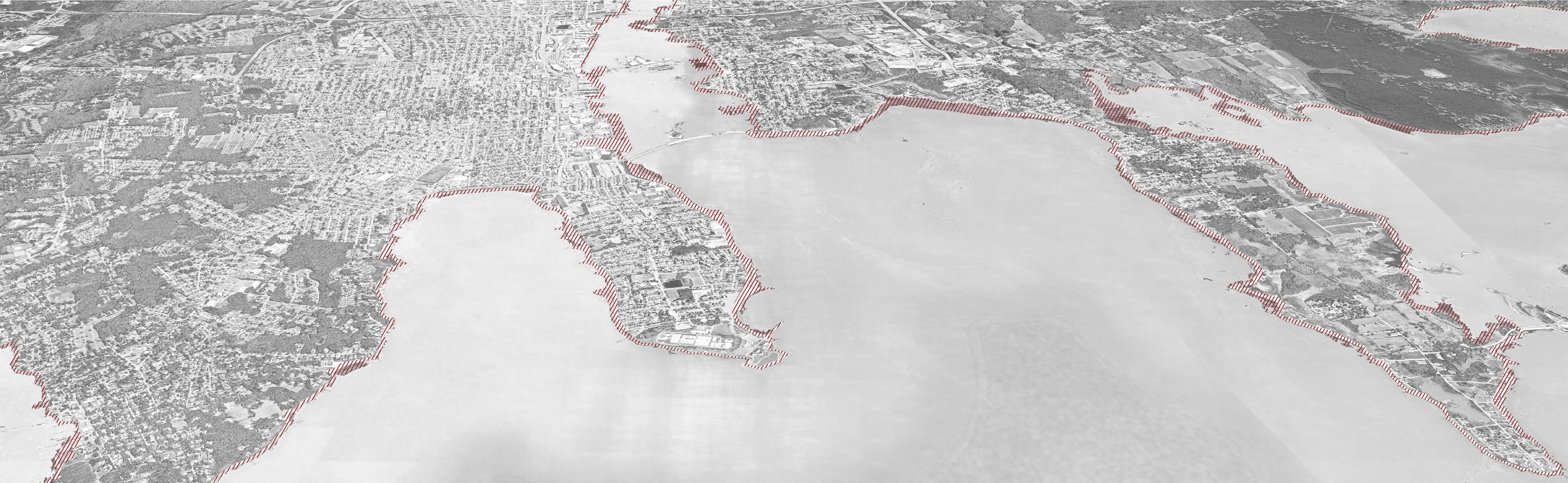
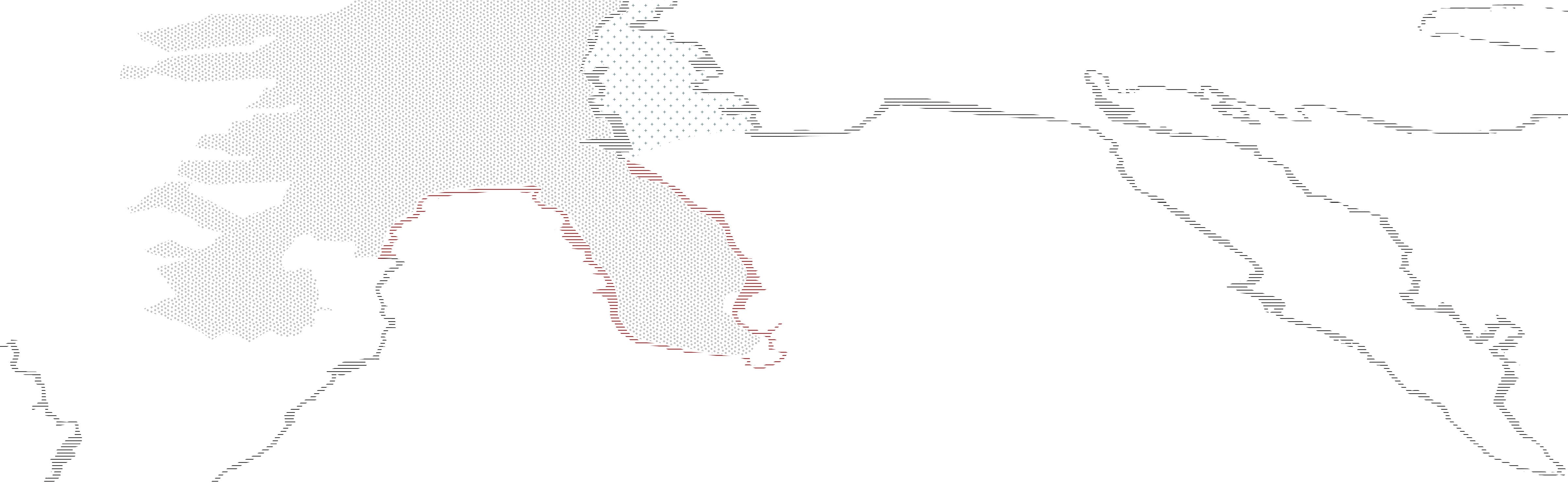
II. Choose Priority Sites
Based on the research of two agents, priority sites are chosen in the area. The offshore site is the current scallop dredging areas in Buzzards Bay, which will be transformed to undersea ruins for tourists and deep-sea scallop hatchery.
The inland site is the coastal line at the South End of New Bedford, which will become coastal scallop farms in the near future.
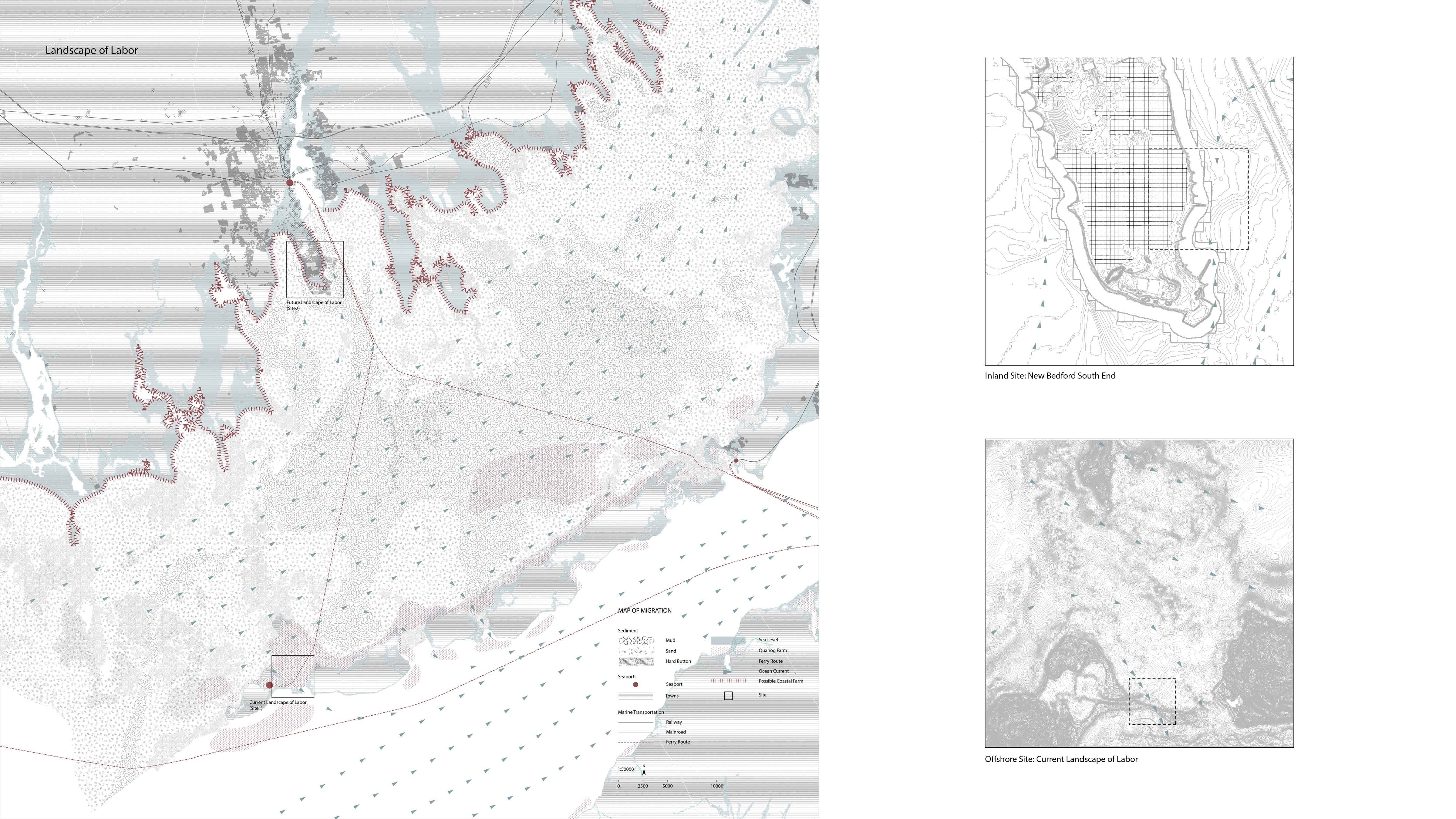
III. Sites Transformation
The interdependence between these two sites is changing. The current relationship is single – fishermen come from New Bedford and then dredge scallop in Buzzards Bay.
In the future, it will be a mutual relationship - New Bedford provides technical supports, tourists, and labors to Buzzards Bay, and Buzzards Bay provide New Bedford with scallop seedings and economic benefits.
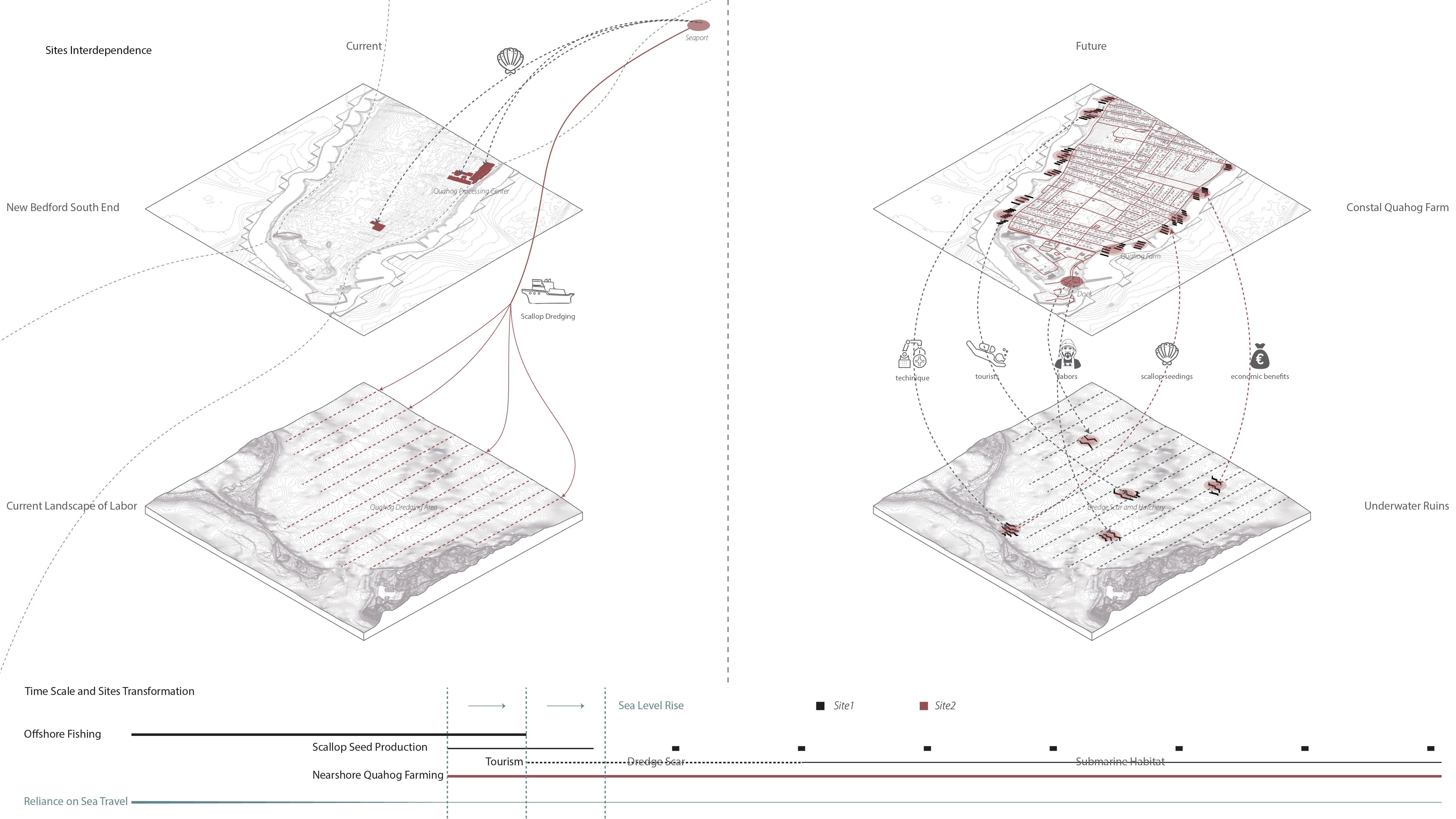
02. Prototyping
I. Sediment Type
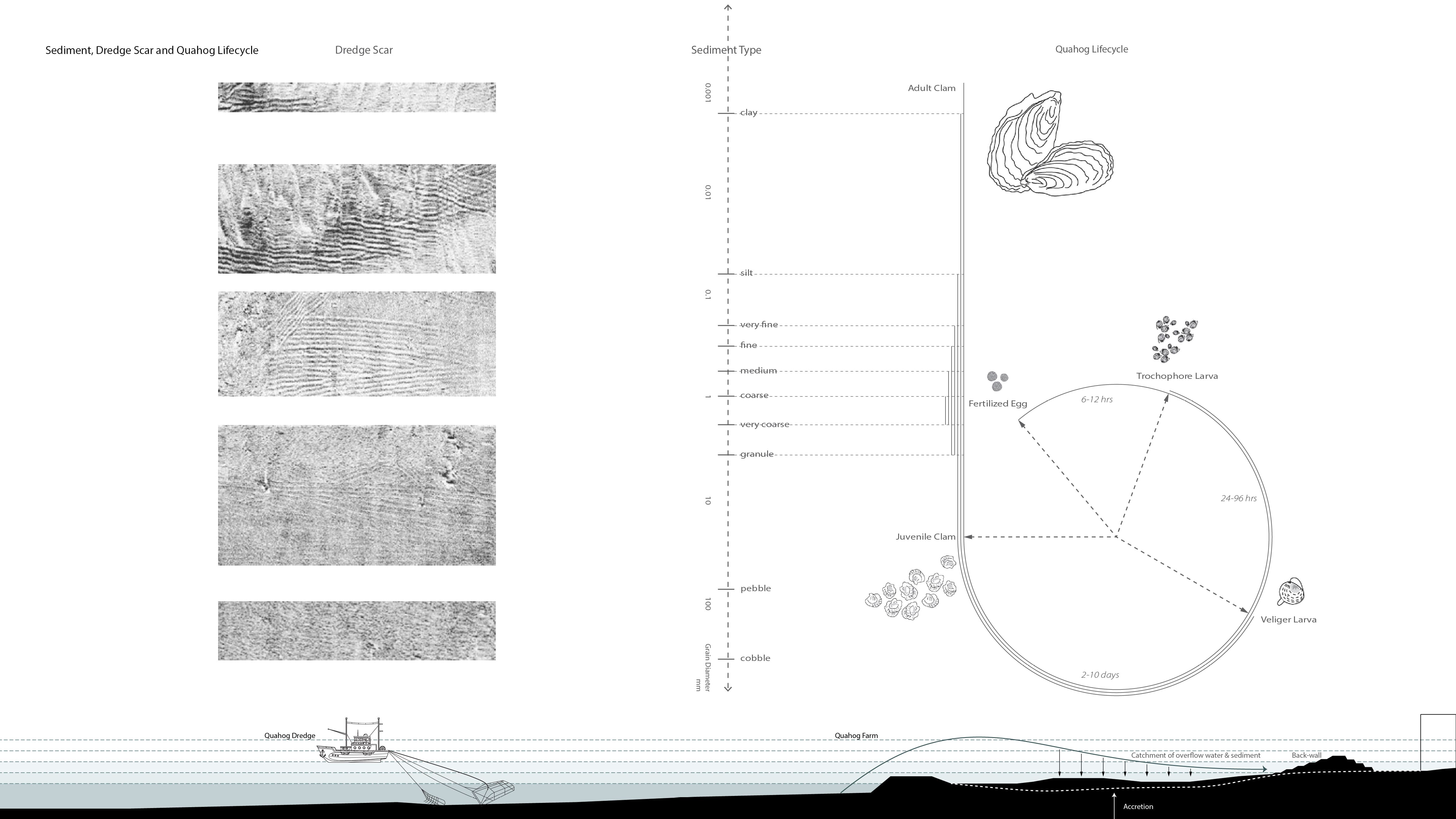
The transformation will be achieved by managing sediment. On the one hand, scallop dredging left scars on seabed sediment. On the other hand, quahog, the main scallop species in this area, spend most of their lifecycle in sediment.
The initial design idea is to prevent sediment depositing on dredge scars in inland sites; and to improve suitable types of sediment depositing to build the scallop farm in offshore sites.
II. Landform Prototype
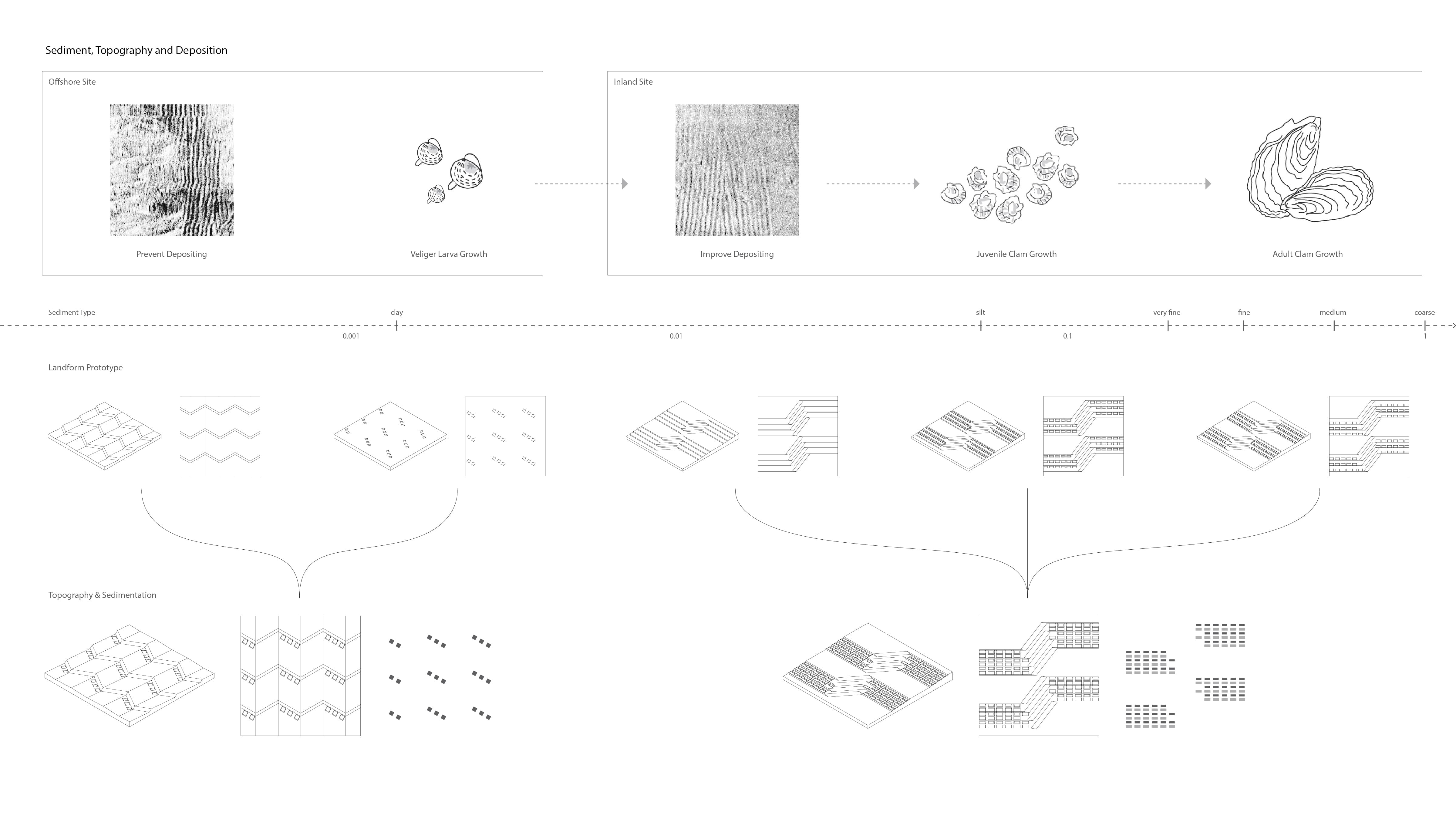
This is the test that the ability of different landforms to catch different types of sediment. Then apply the topographies to the sites to achieve the expected effects.
By creating the landform in the direction facing the ocean current, sediment comes along with the current would accumulate at the lower areas and avoid the dredge areas.
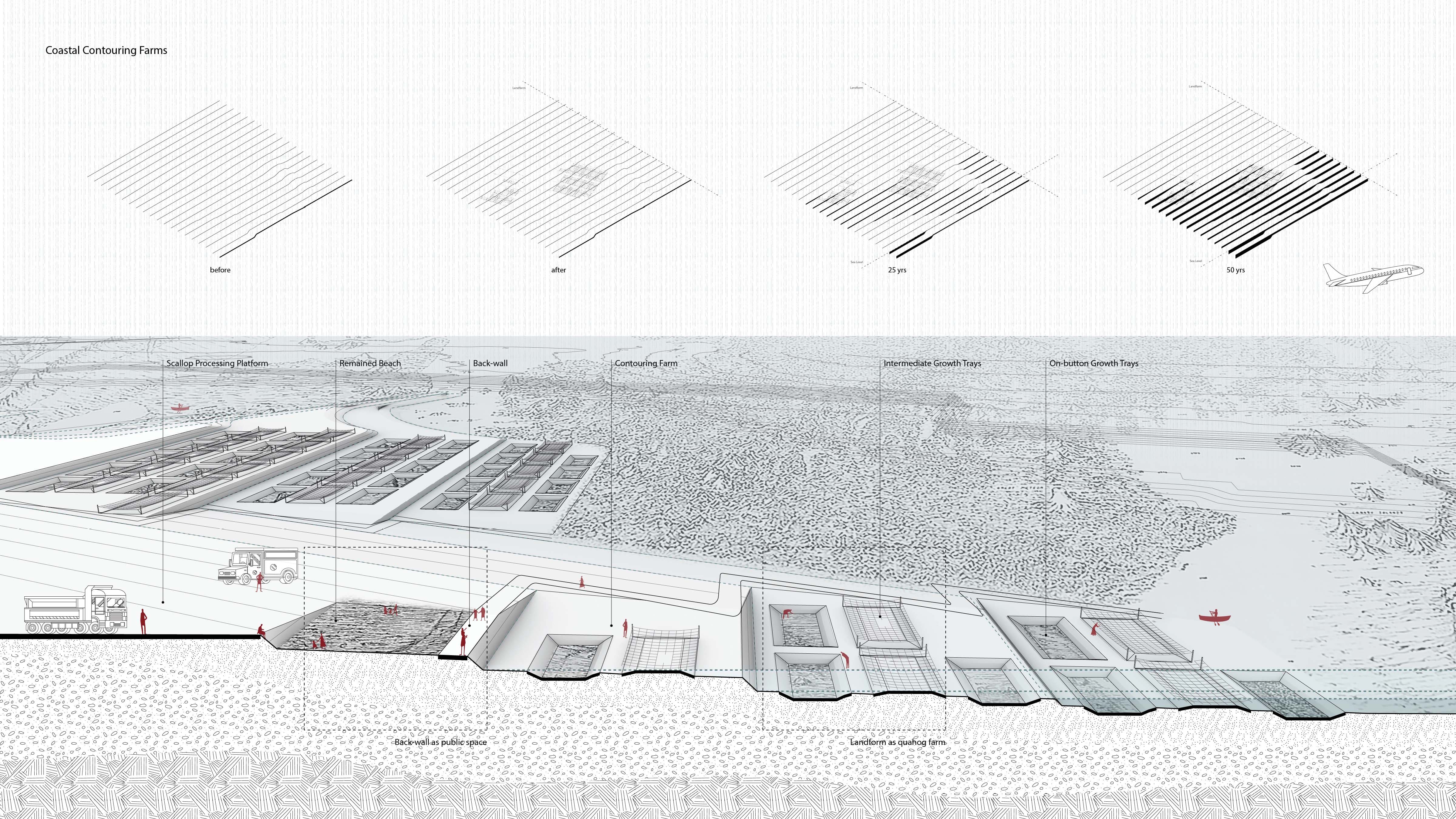
The other landform is to catch sediment for scallop farms. The contouring farm enables the sediment to accumulate on the terraces.
03. Testing
I. Offshore Site Testing
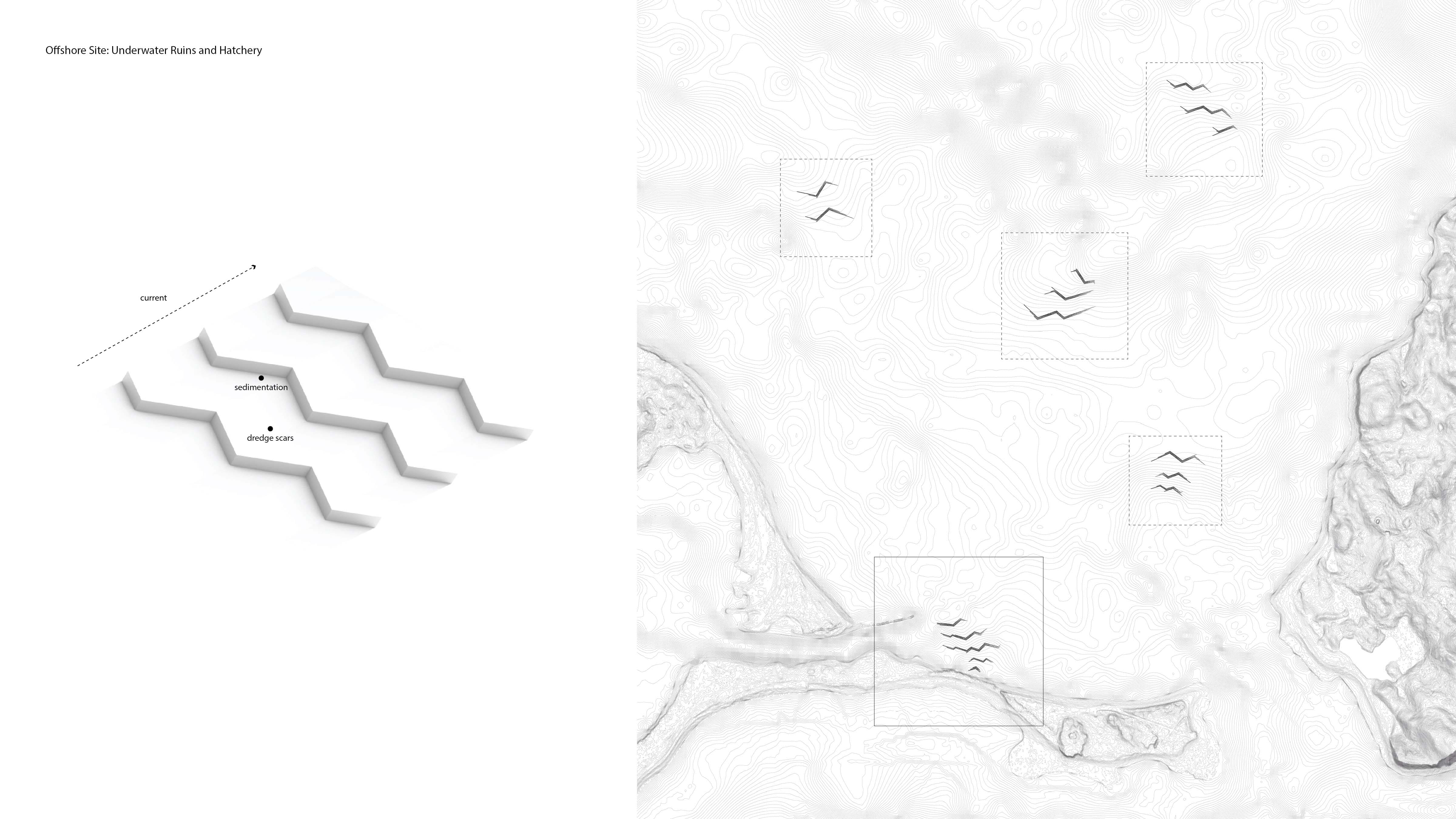
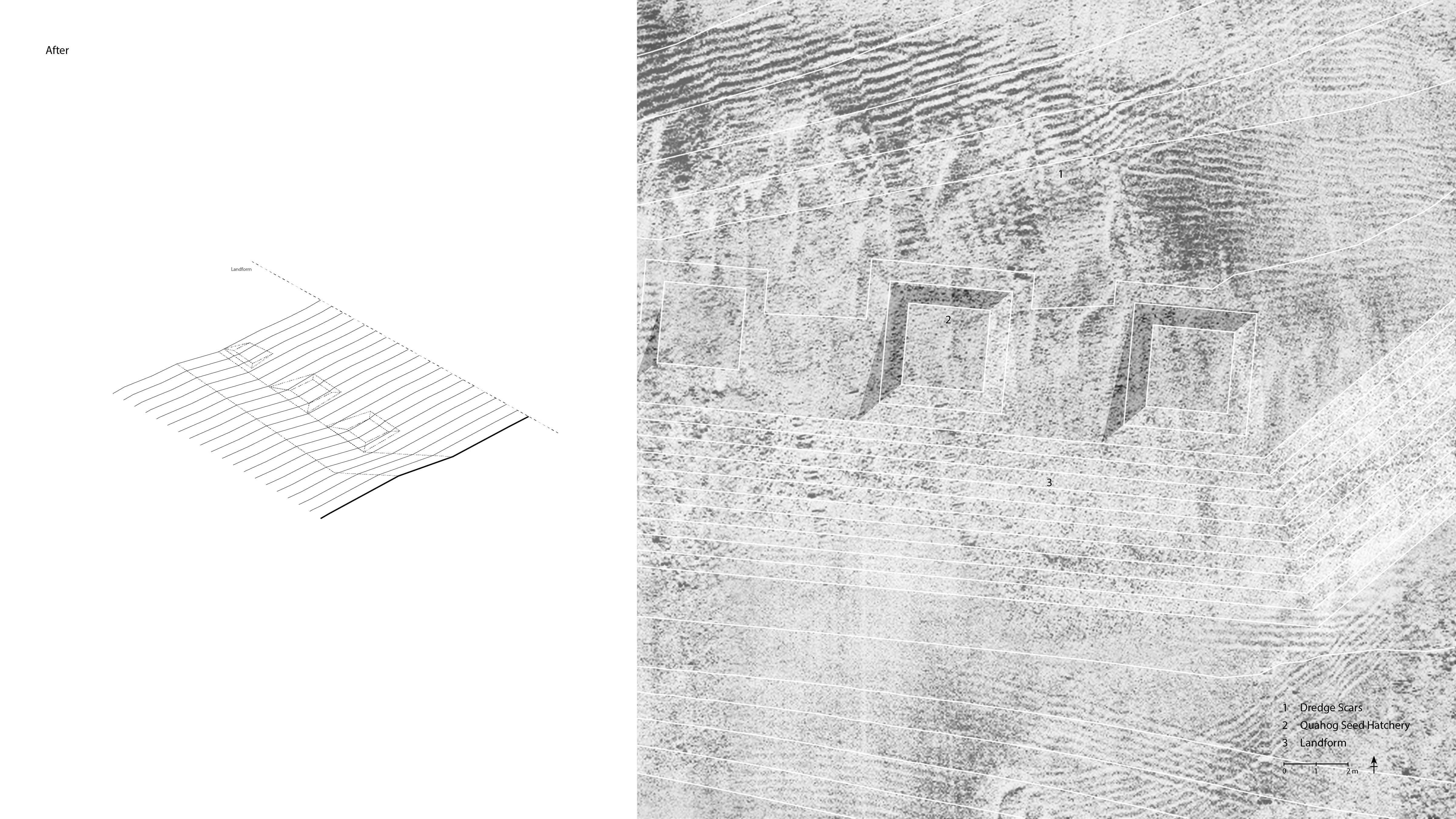
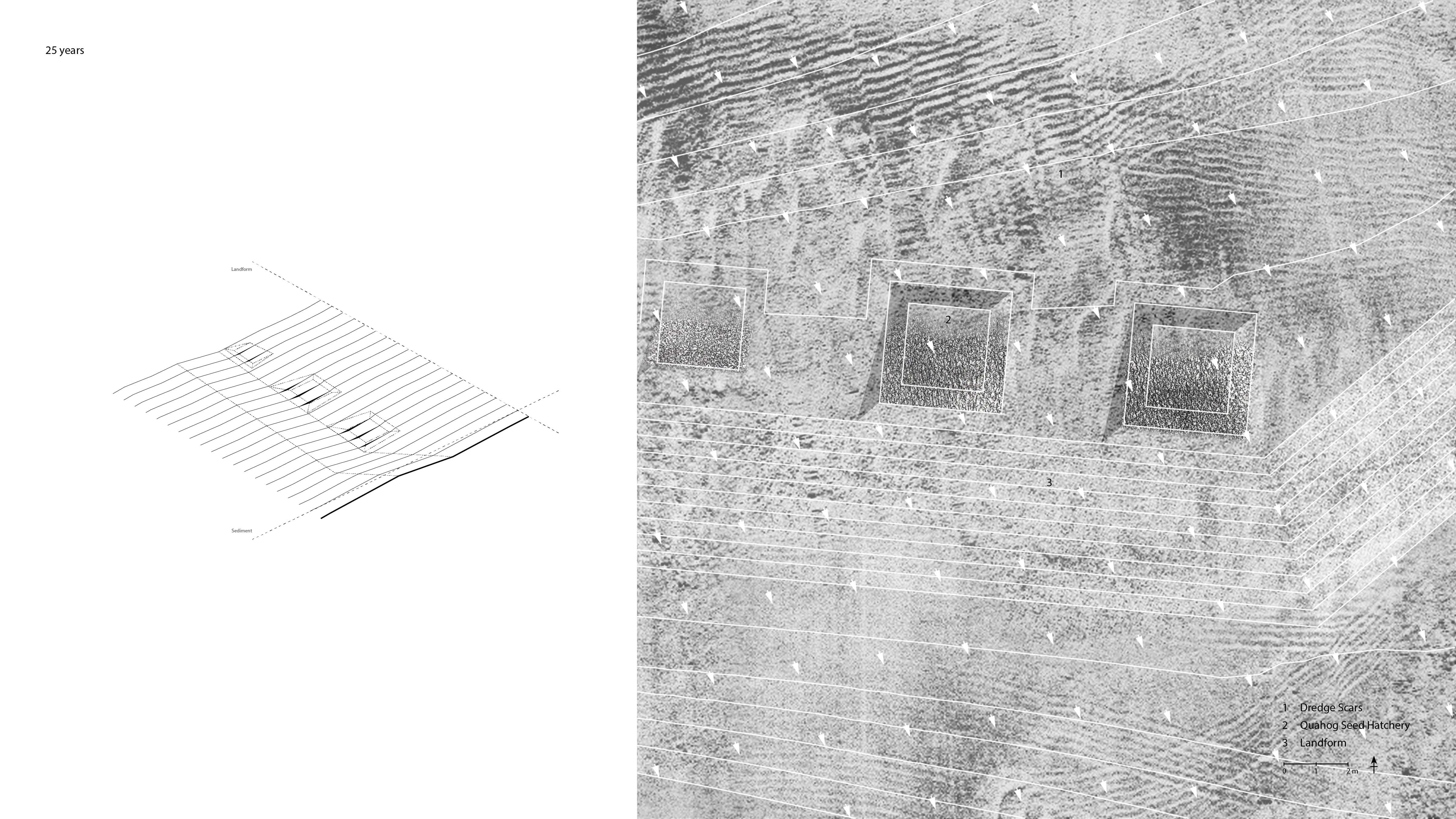
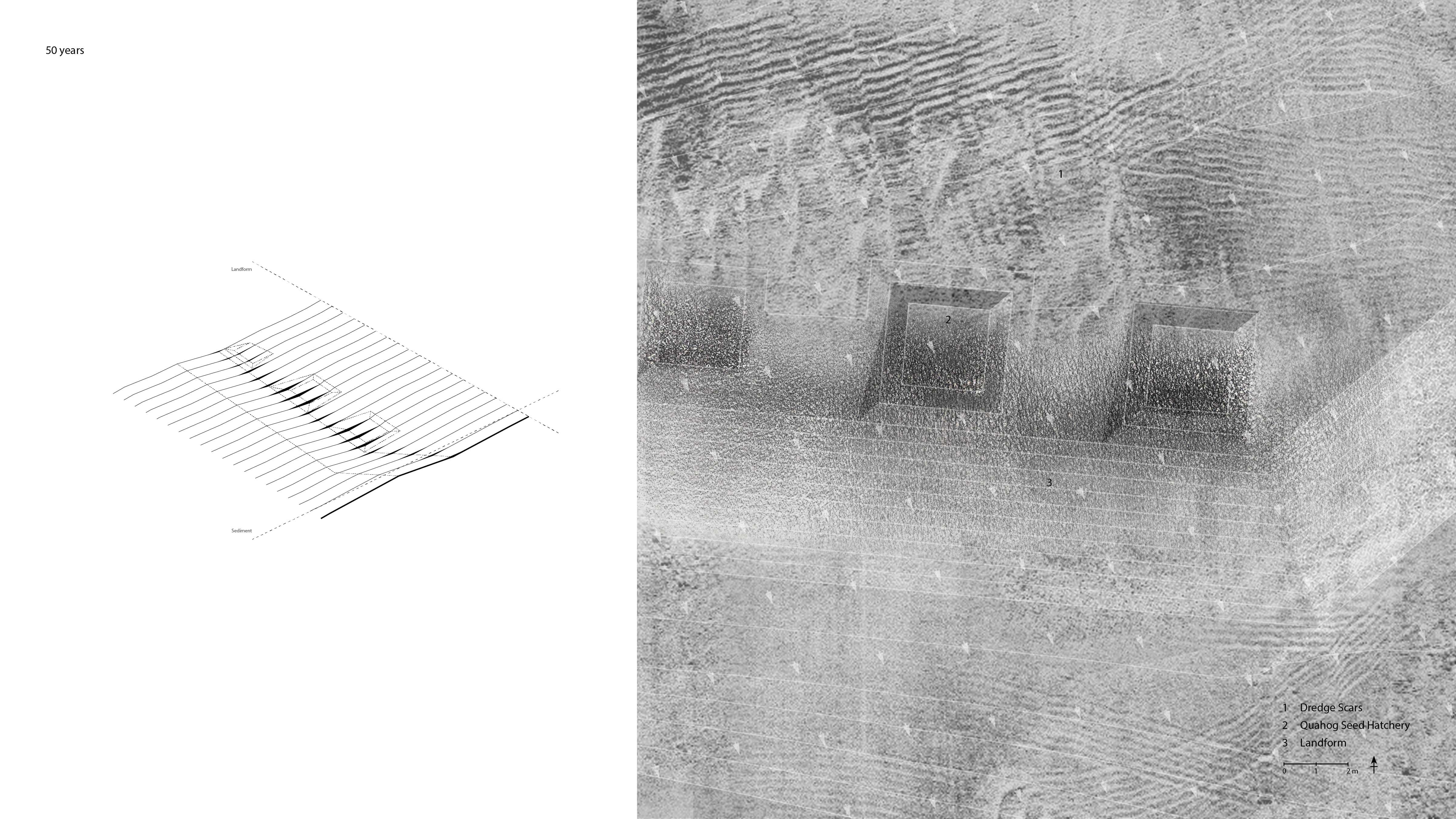
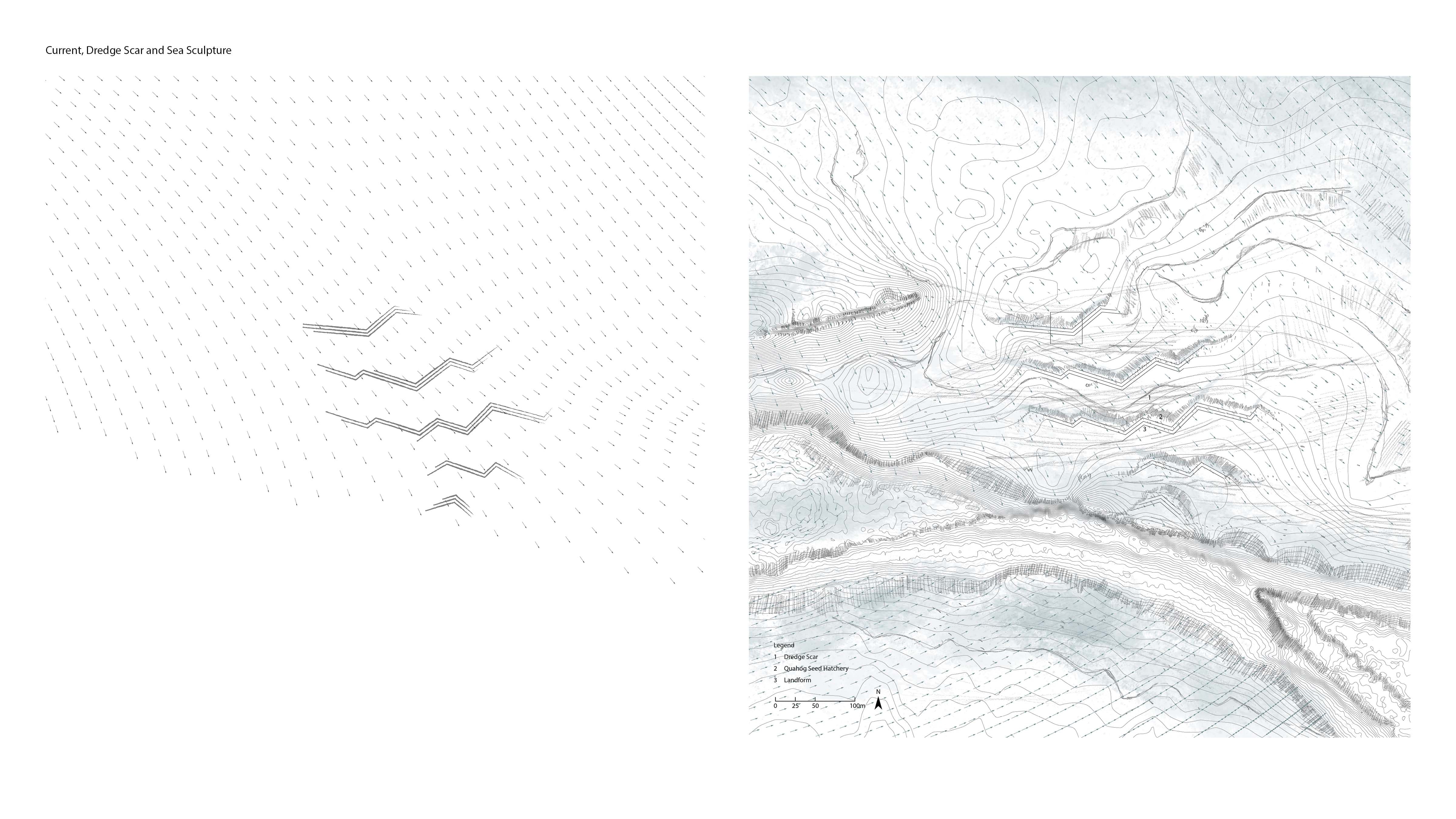
When apply the landform in the direction facing the ocean current to inland sites, sediment comes along with the current would accumulate at the lower areas and avoid the dredge areas. The lower areas, covered by sediment, will form the new habitat and scallop hatchery. This is the situation that the sea sculpture applied to the whole current landscape of labor.
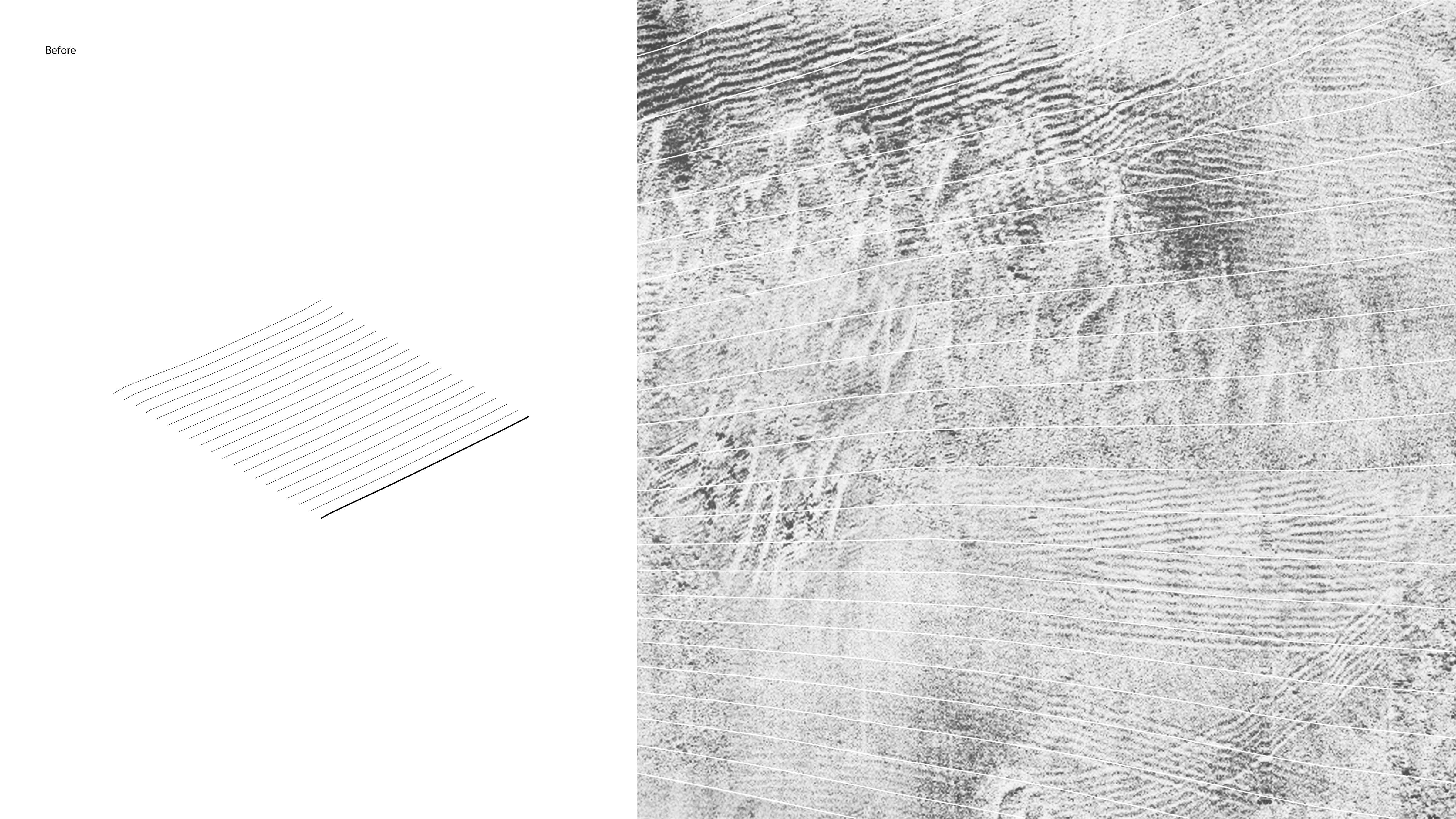
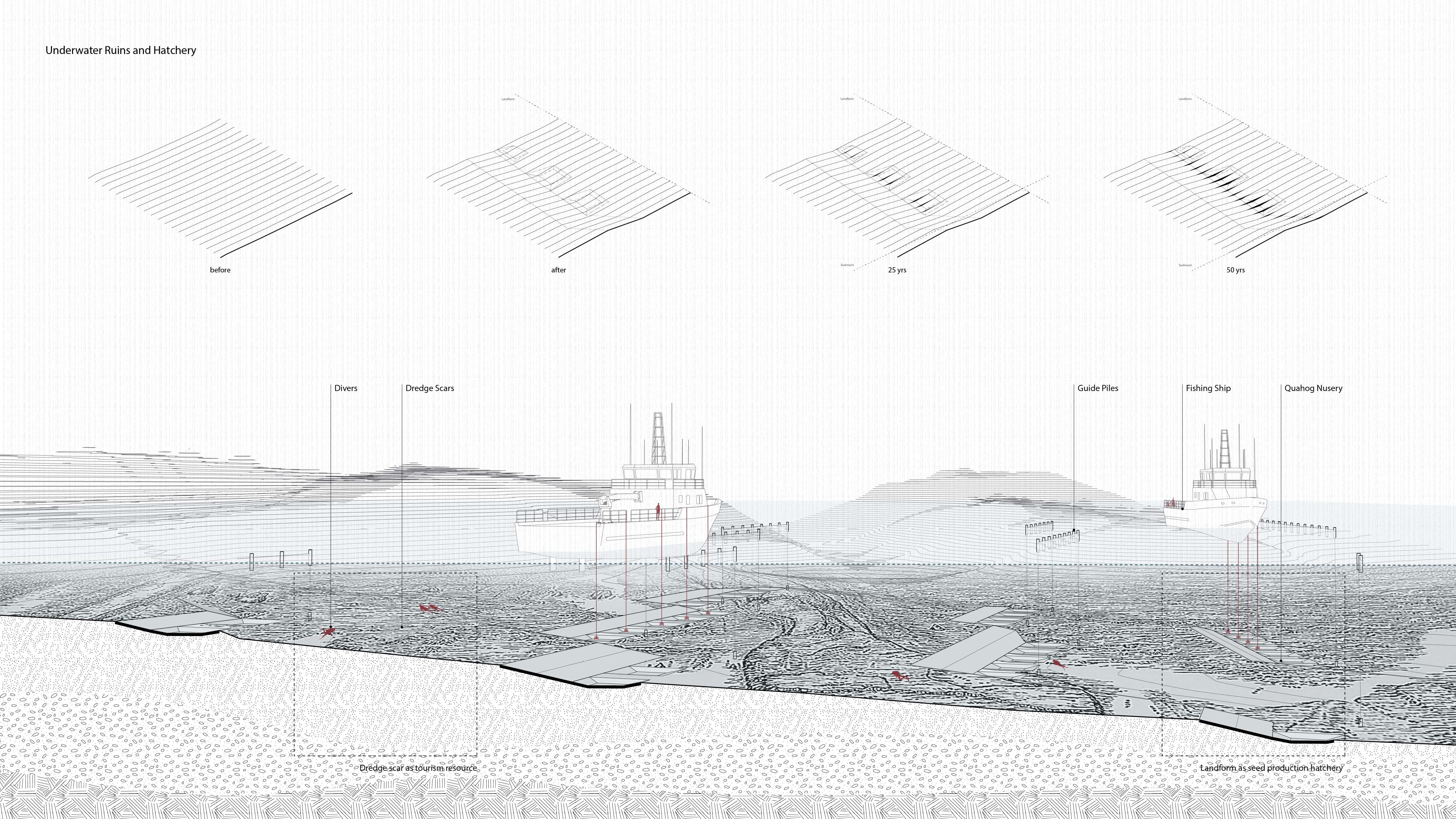
In a more zoom in scale, the landform facing the current enables the sediment to accumulate in the lower areas, which makes the dredge scars remain and scallop hatcheries form. The sediment will accumulate as time goes by.
II. Inland Site Testing
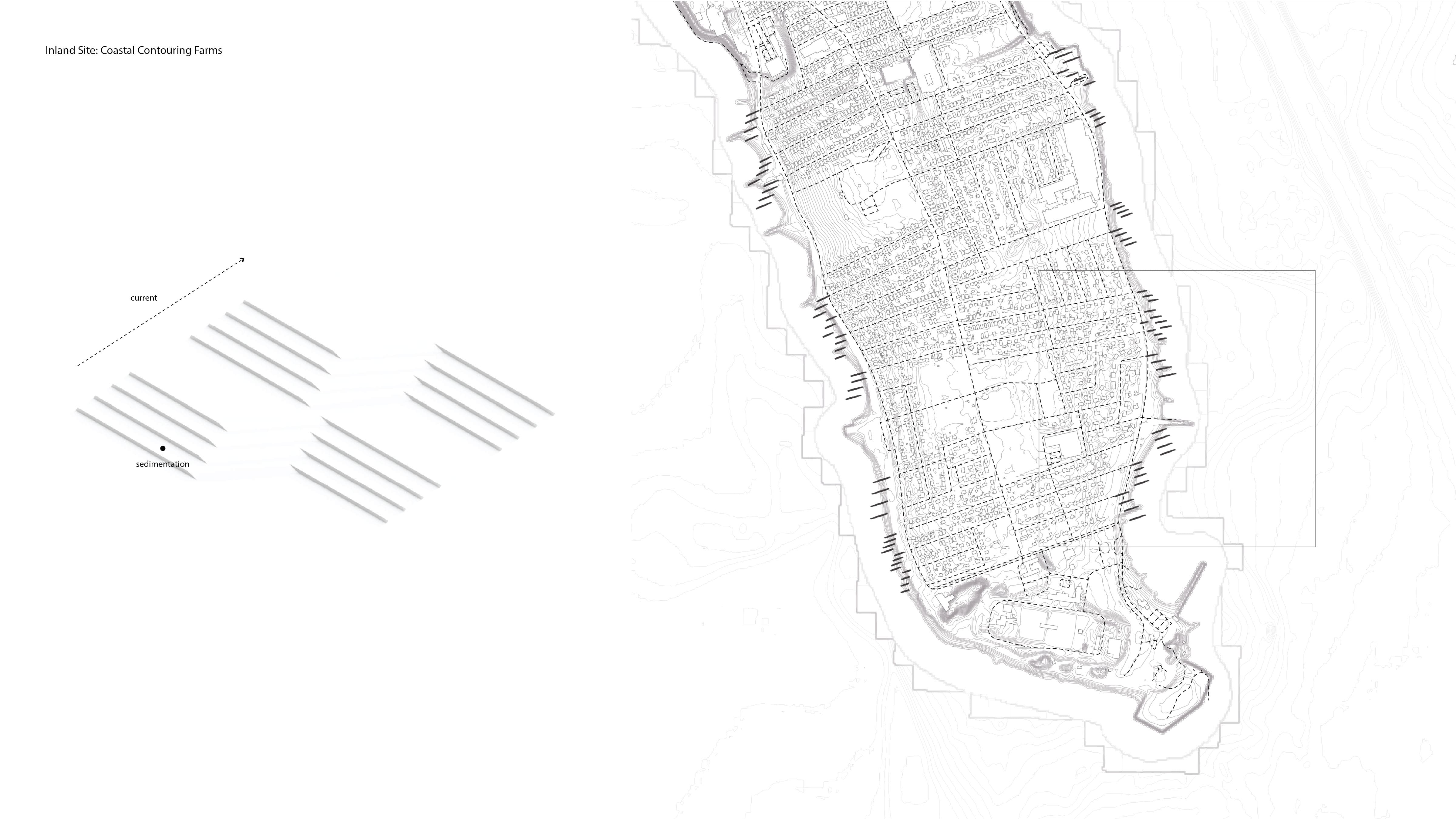
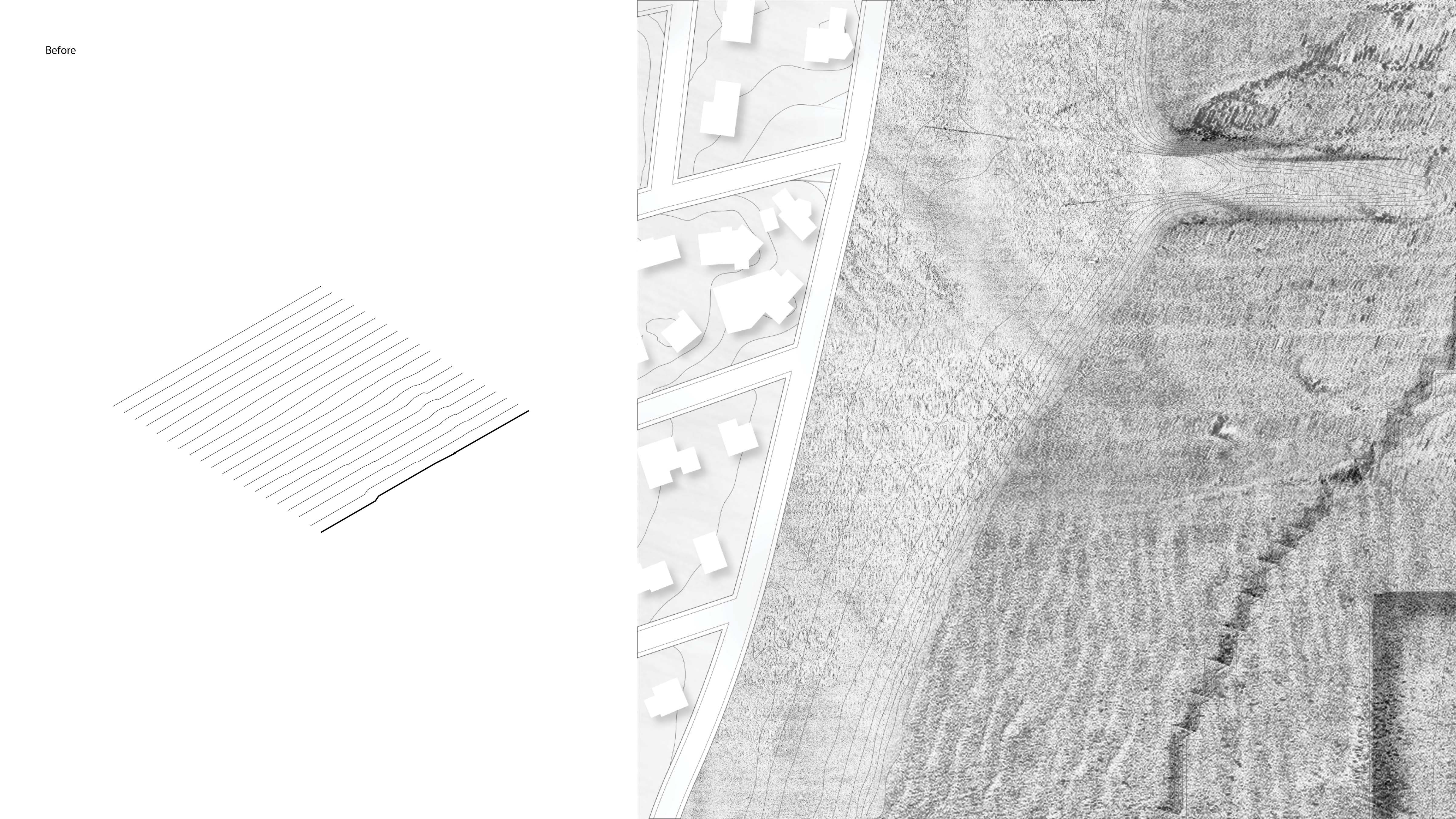
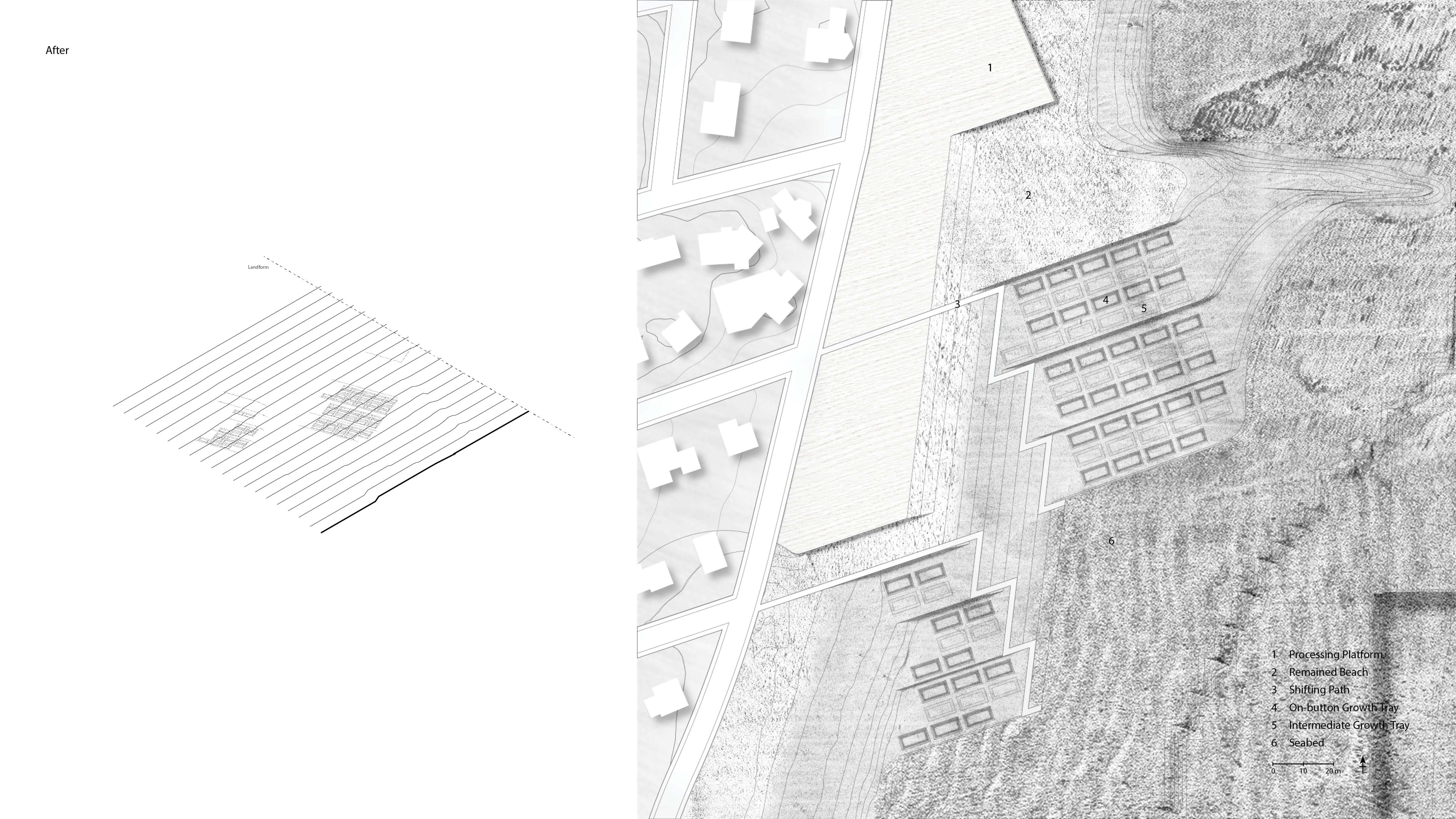
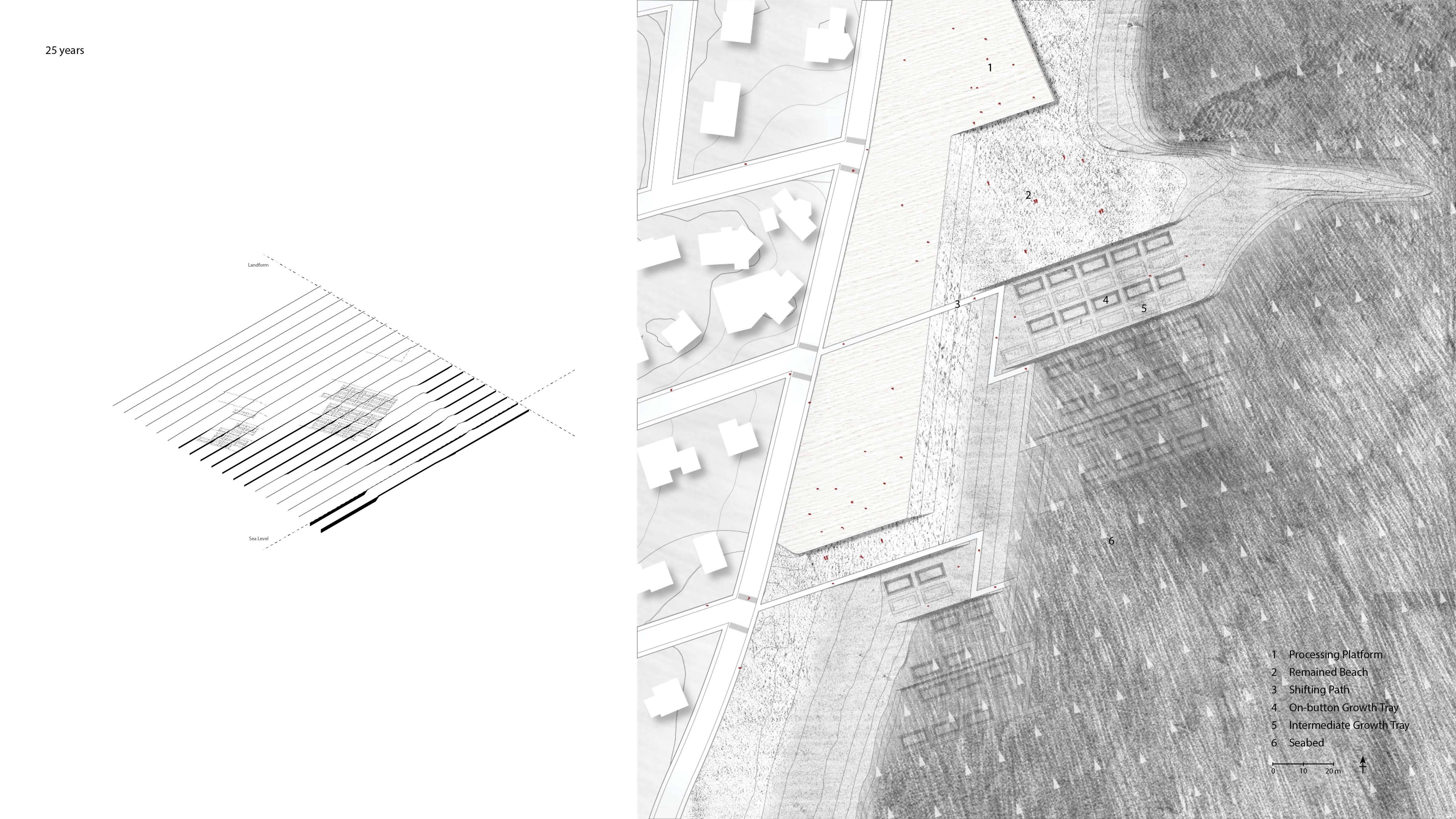
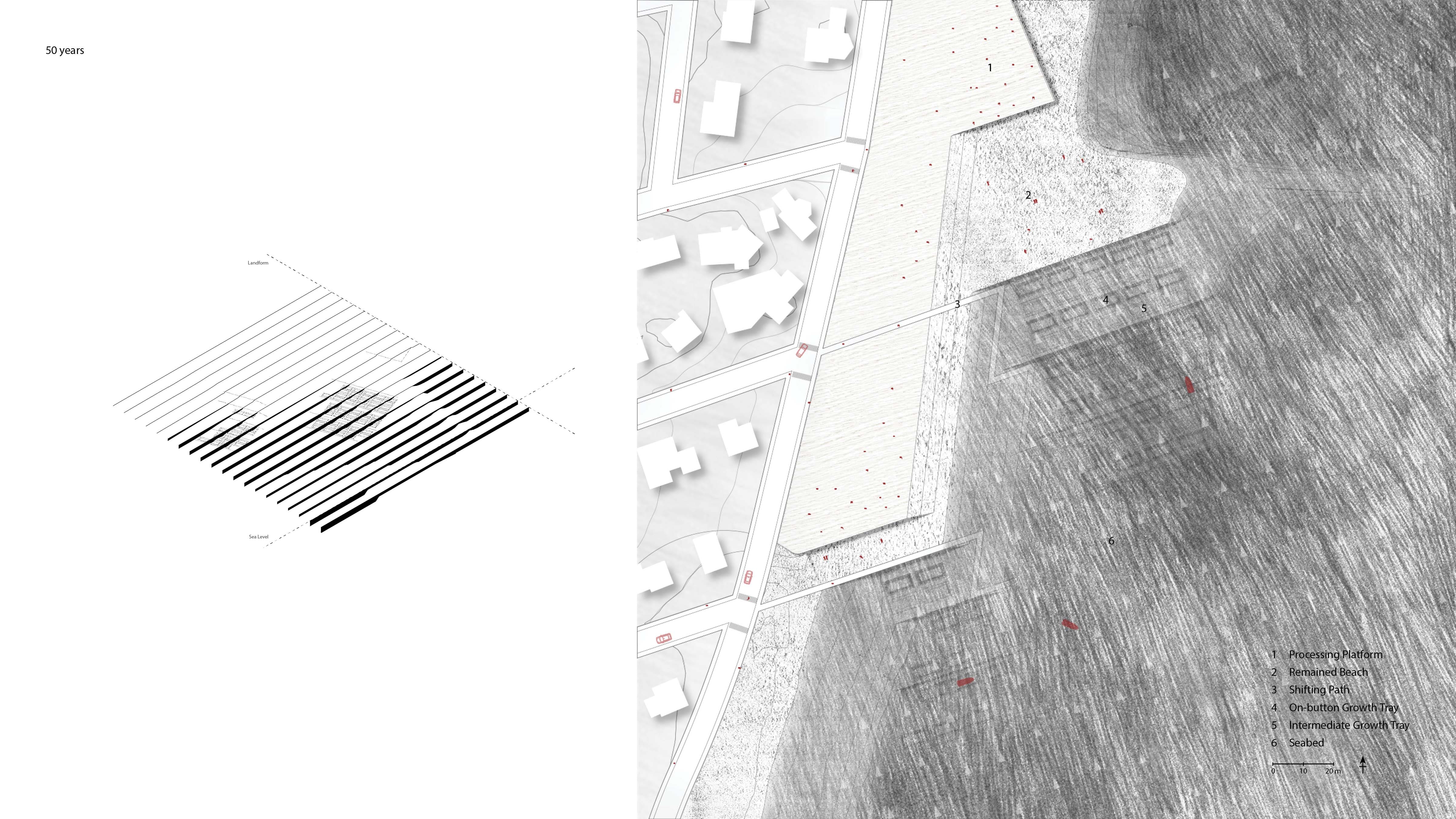
The landform for offshore sites is to catch sediment for scallop farms. The contouring farm enables the sediment to accumulate on the terraces. This is the situation that the contouring farm applied to the whole suitable coastal areas in New Bedford.
When zoom in to the designed area, the arrangement of the landform is according to the current direction and the urban texture. By weaving the landform to the urban area, I hope they are not only functional for scallop farming but can also serve as open space for New Bedford citizens.
04. Final Designs
I. Offshore Site
The offshore site will be a combination of the tourism and the scallop hatchery.
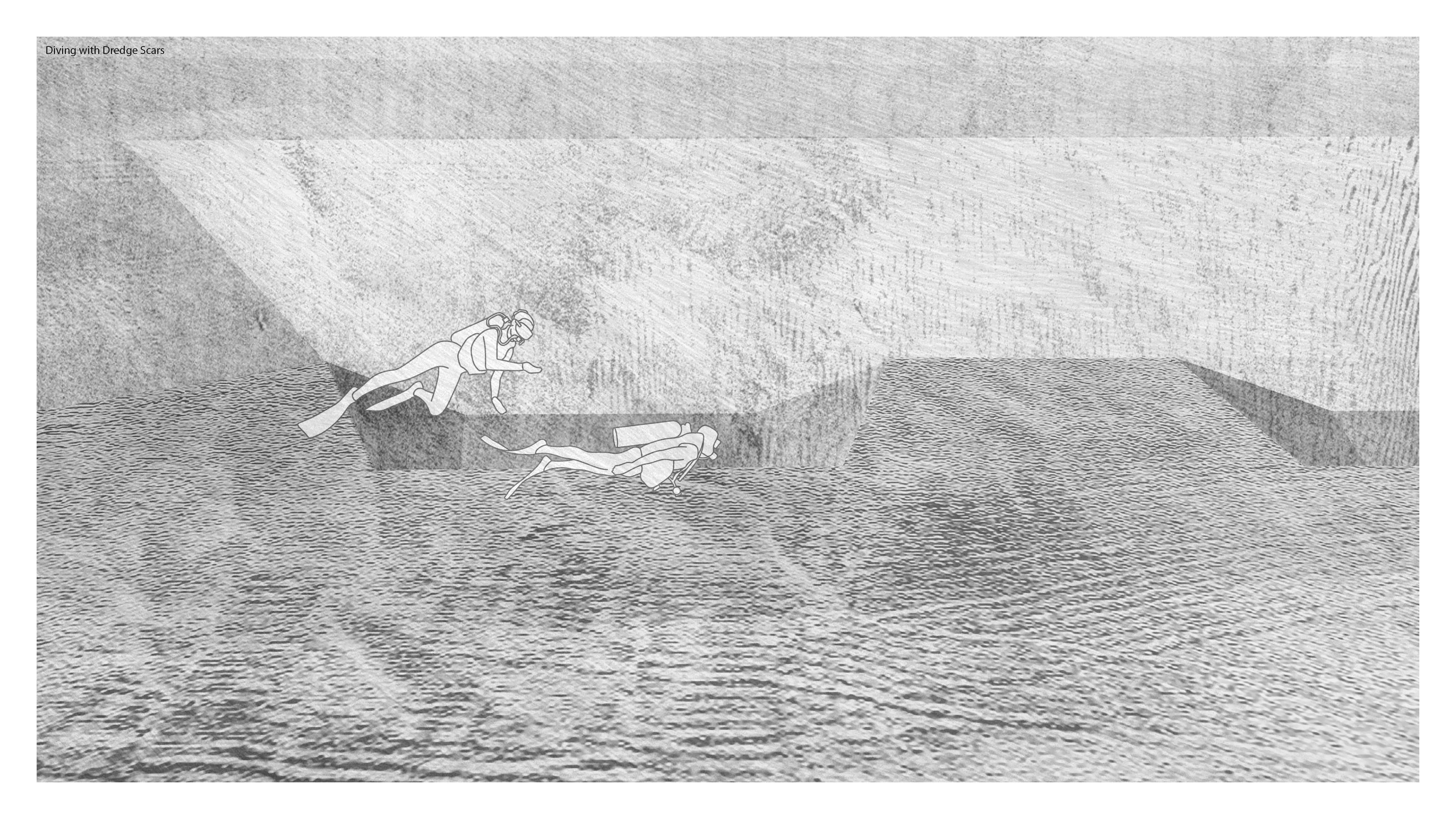
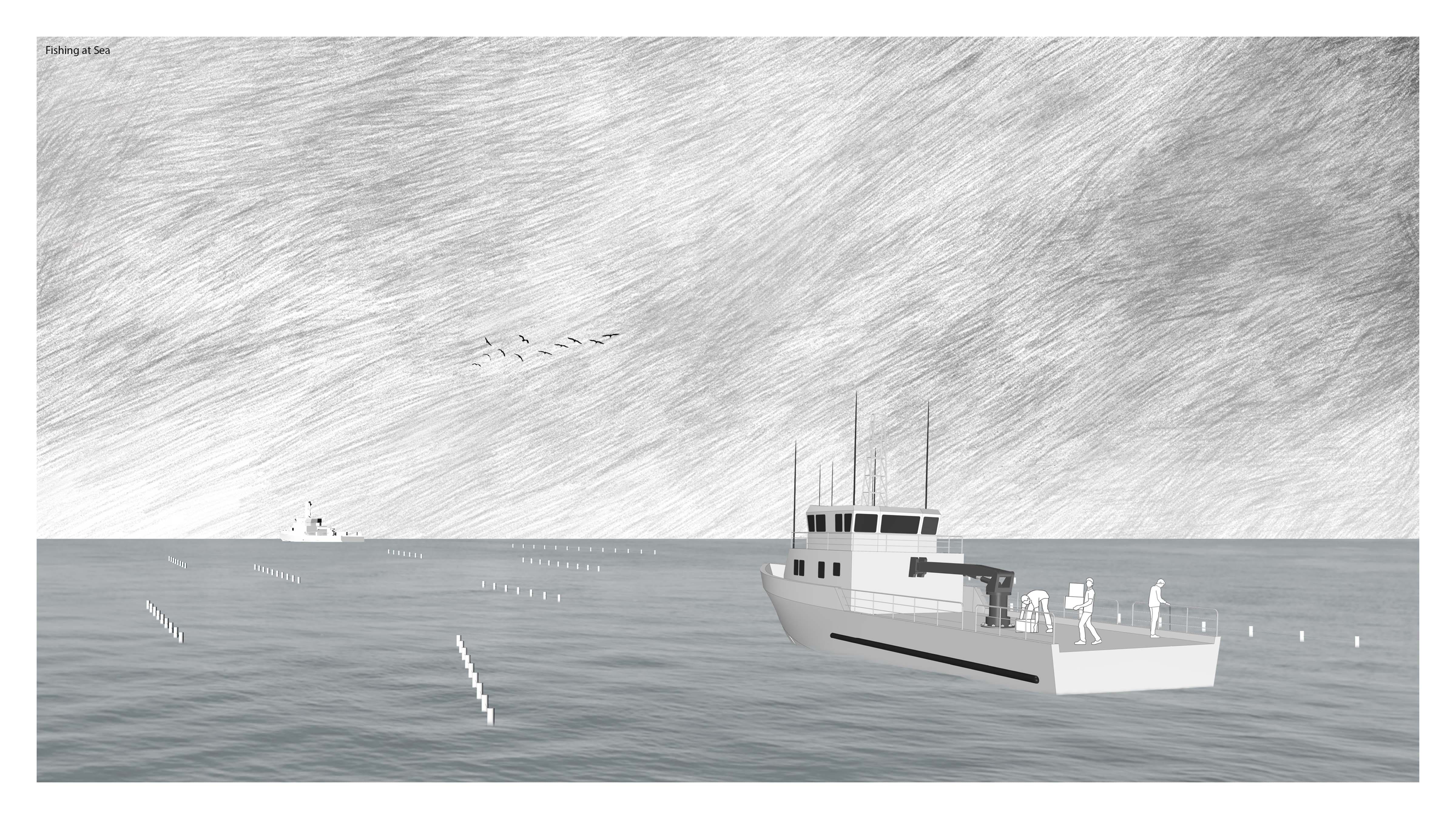
Tourists come here for sightseeing the dredge scars and picking scallops themselves. Fishermen come here for juvenile scallop and bring them back to New Bedford for productive farming, which will largely reduce the amount of fishing trips.
II. Inland Site
The inland site will be a combination of the quahog farm and the public space.
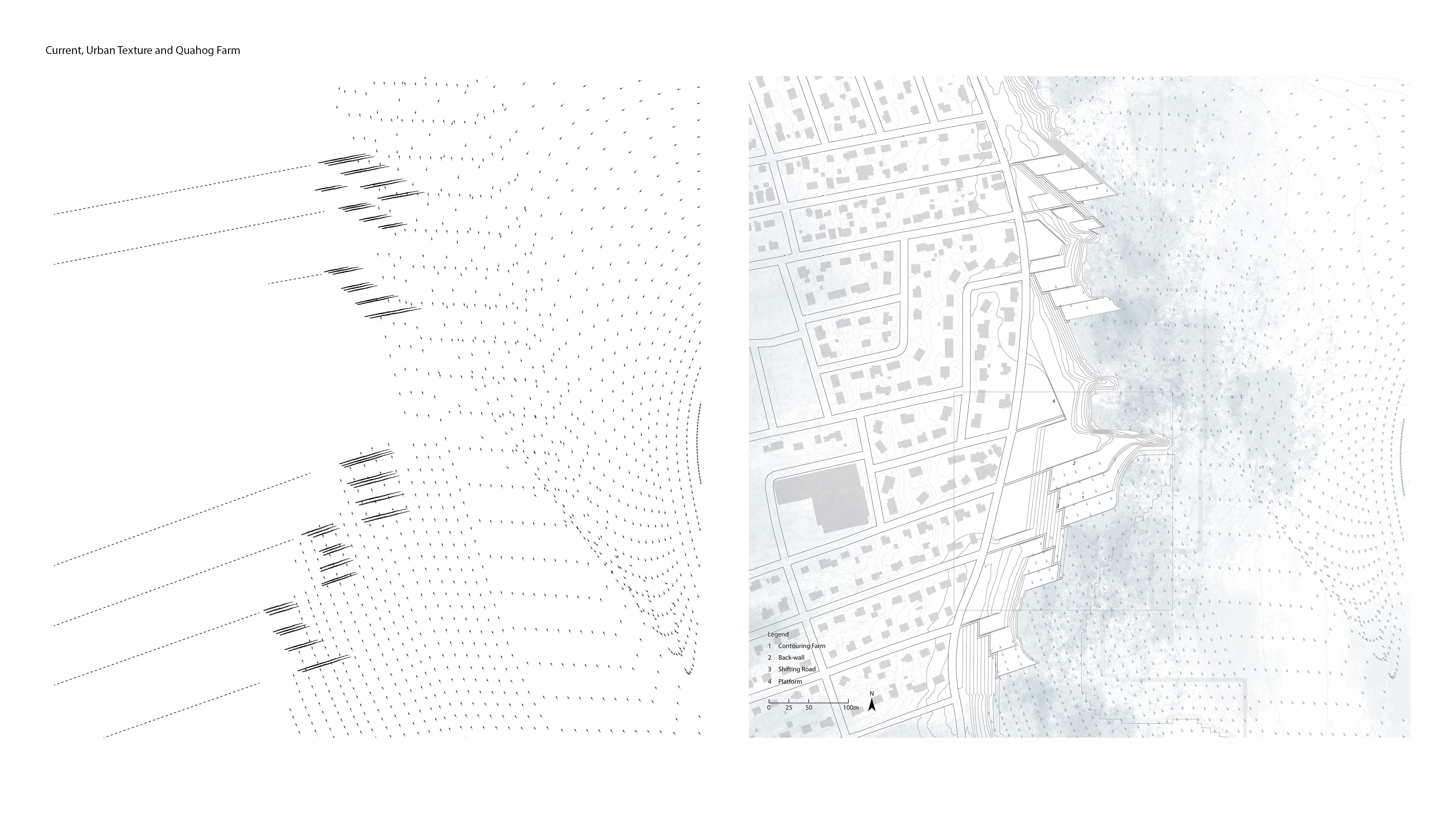
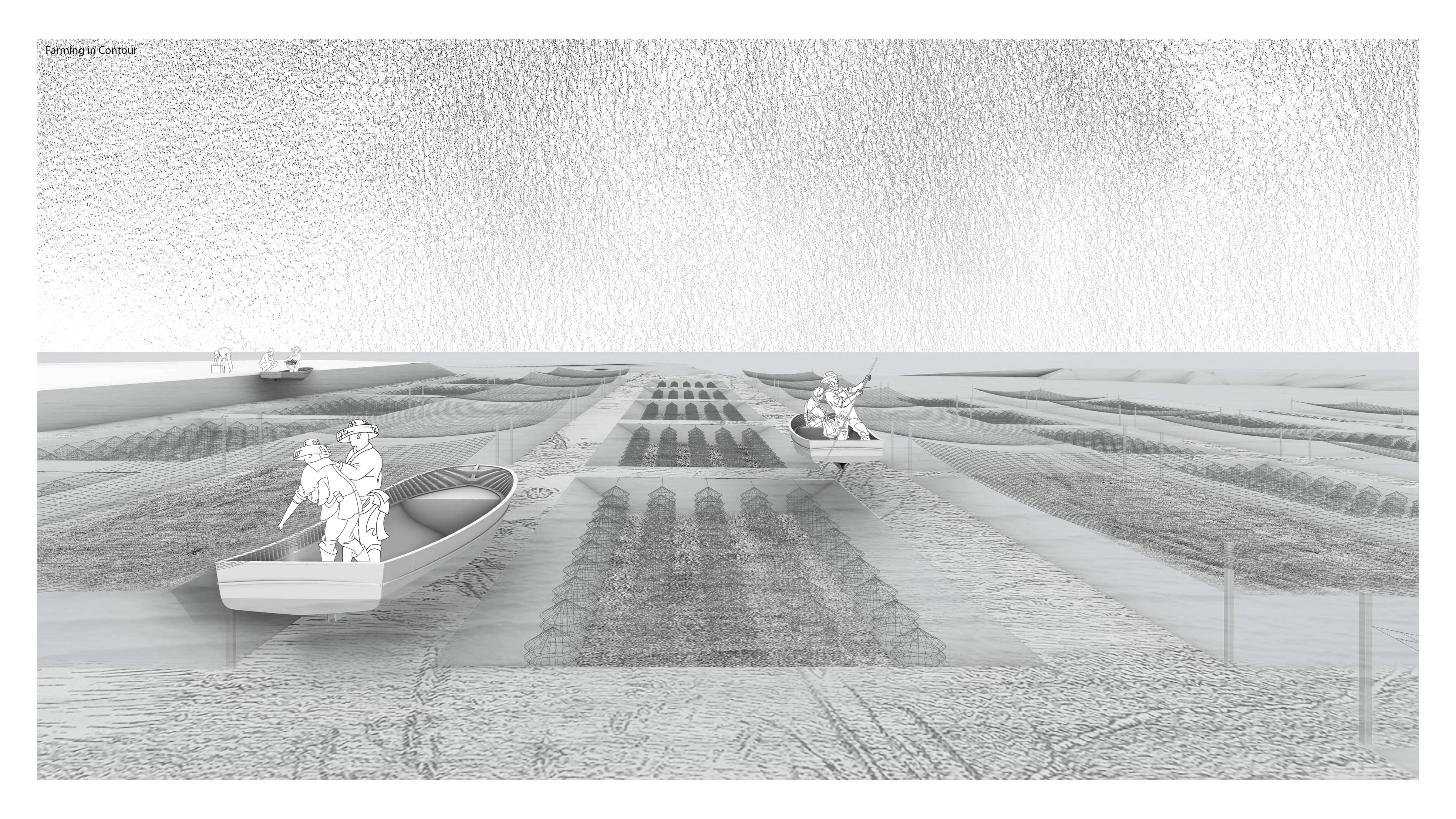
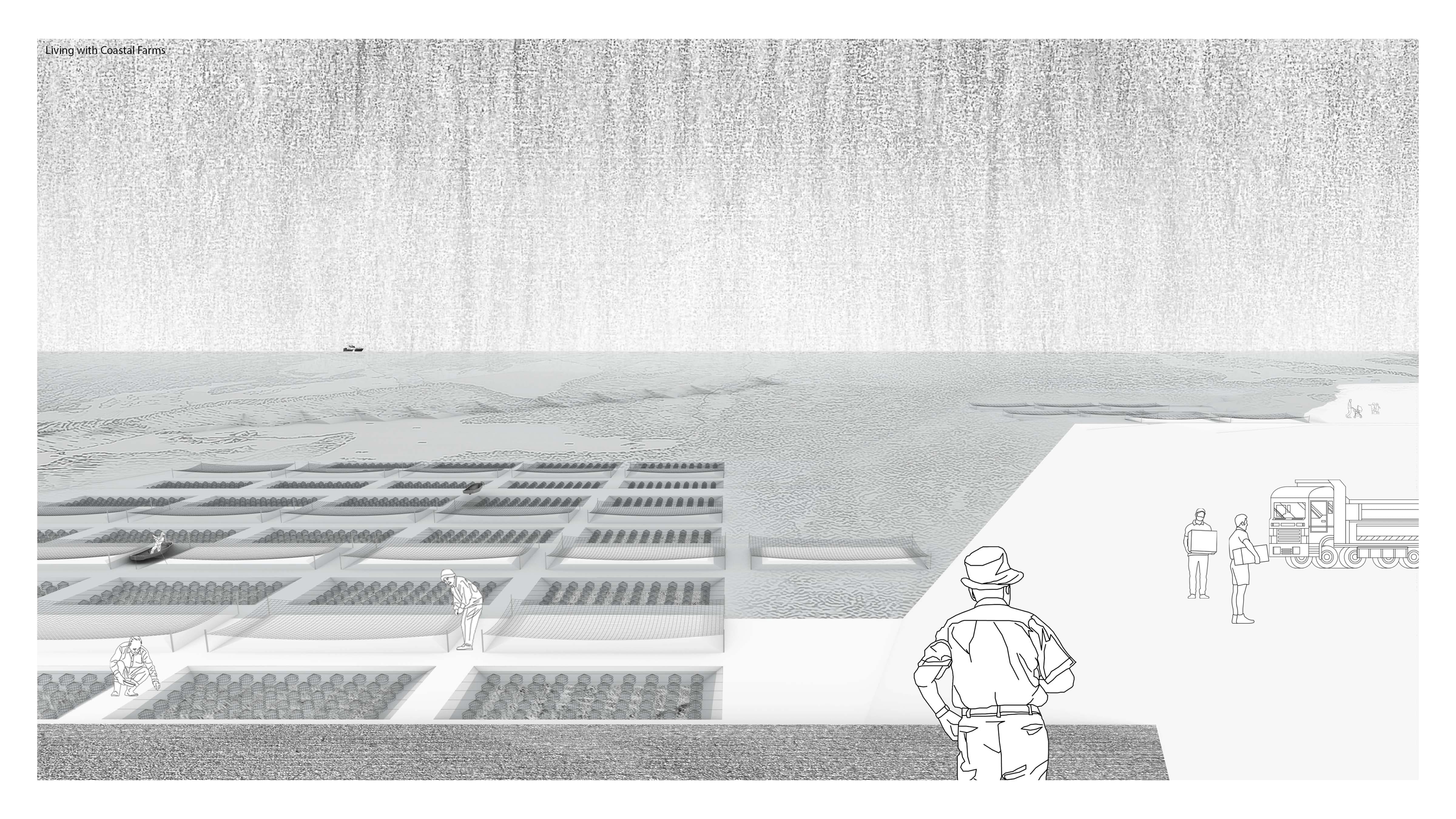
The landform catches the sediment, forming the scallop farms. Fishermen work here. Working fishermen can be seen by people in the public place formed by the landform in turn. Climate change will be both challenge and opportunity for the new shellfish industry.
05. Impact & Reflections
In this project, design approaches are grounded in the material media of the discipline—sediment, scallops, water dynamics—and their controlling infrastructures, physical and policy-based.
It explores: How productive sectors will migrate due to climate risk; What happens to the land left behind; How these landscapes can support dignified spaces for work and self-determination.
These design propositions may lead to new forms, scales, and cadences for work and habitation that may seem improbable under current systems of funding, fuels, and power. In the 21st century, the socially productive landscape reconsidered does not merely provide the stuff of everyday life closer to home. It demands a paradigm shift from landscapes that are discrete and transactional to those that foster a commonwealth of human and natural labor.