PayBlocks Banking
HSBC Product Management and Web3 Externship
Role: Product Management Extern, UX/ UI Designer
Disclaimer: To comply with NDA, I have obfuscated confidential information in this case study. All information in this case study is my own and does not necessarily reflect the views of HSBC.
PayBlocks Banking
Playing an important role as one of the infrastructures of crypto banking solutions, and onboarding the next 1 billion Web3 residents.
Discovery
The shift to digital, primarily mobile and online banking, is the most pervasive trend now seen in the financial services sector. Because of the digital change, especially the boom of Web3, there is now more competition from tech firms and smaller banks are being consolidated.
To cope up with the customer needs, financial institutions are currently seeking for chances to quickly adopt a variety of banking industry trends and Web3 solutions that will help them alter their current business model, increase the effectiveness of the operations, and boost their competitiveness on the banking market.
What impact does Web3 technology change have on online banking?
Mind Map
In order to articulate and familiarize myself with what's going on and the possibilities of what could happen in the Web3, banking, and adjacent spaces, I created a mind map on current trends in fintech and Web3 and current problems in the banking industry.
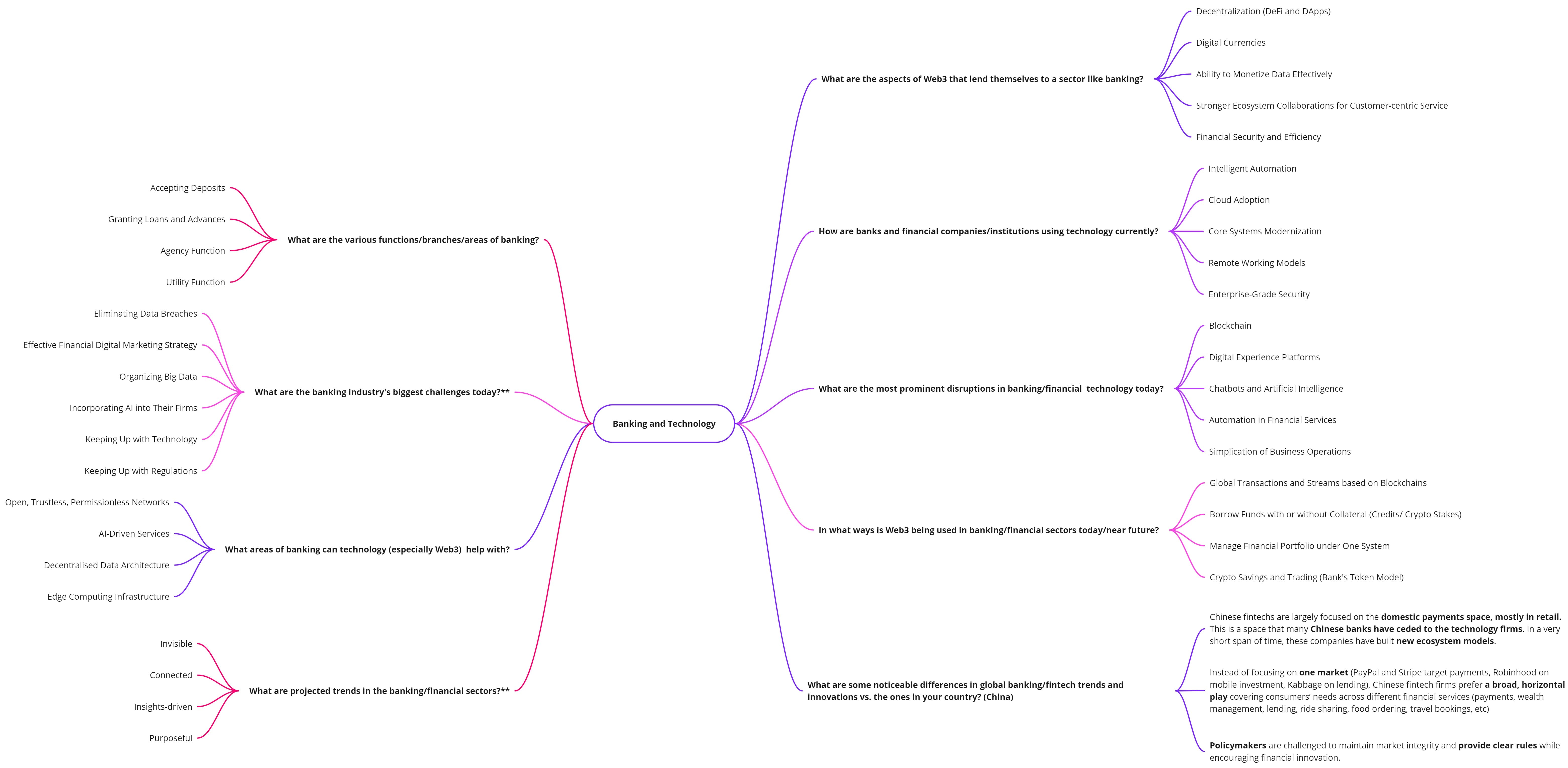
01. Research
Based on the mind map, I brainstormed several ideas, including C2C Crypto Payment Solutions, Tokenized Real Estate, and Wallet Based Security Tool. After discussing with the HSBC team, I narrowed the scope and designed an integrating C2C crypto payments for personal customers, which will play an important role as one of the infrastructures of crypto banking solutions.
I. Market
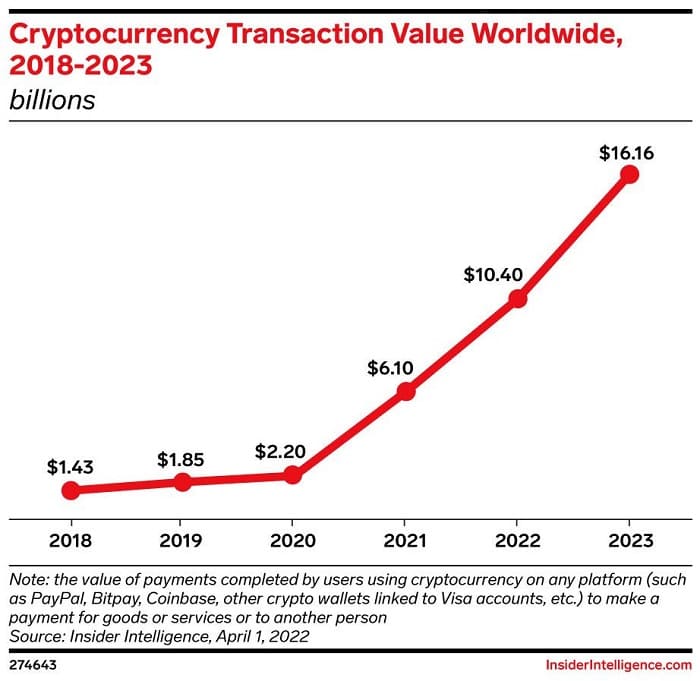
In 2021, cryptocurrency accounted for $6.10 billion worth of transactions worldwide, up 177.3% from $2.20 billion the year before. Come 2023, crypto transaction value will hit $16.16 billion.
Nearly 13% of US adults will own crypto this year, per our estimates. Most are in it for long-term investment, with only about 10% of US owners using their crypto for transactions. That said, the base of crypto payment users will expand at high double-digit rates through 2023, even as growth in owners decelerates.
II. Problem & Solutions
Problems:
Paying with wallets no longer satisfies people's increasing needs for crypto payments. Paying and transferring in crypto can be time consuming. If people use personal wallets to transfer cryptocurrency, they need to transfer one by one in sequence, sometimes it will take long due to inefficient nonces and gas fees. Besides, people are unable to request crypto from others, split bills, or make recurring/stream payments in situations such as paying bills.
In conclusion, the core problems are:
- Slow C2C crypto payments
- Lack integrated functions of Transfer Between Accounts, Request and Split
- No access to recurring payment
Solutions:
PayBlocks Banking aims to enable integrating C2C crypto payments for personal customers with various payment requirements and scenarios.
The product solves the problem by giving three main functions:
- Transfer between one person's different wallets
- C2C payment:
- Direct transfer
- Request
- Split - Pay bills (recurring payment)
III. User Story
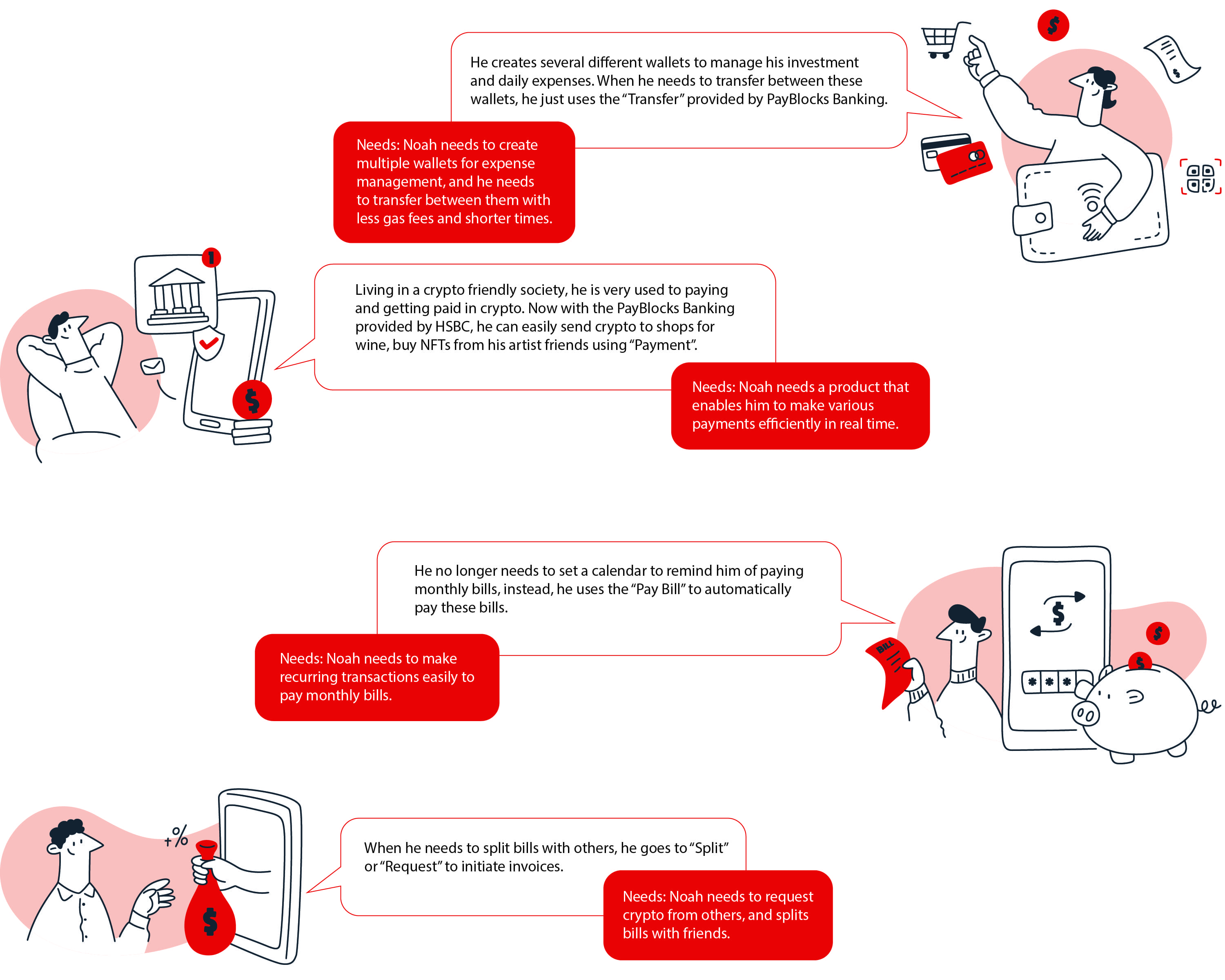
Noah is a multimedia artist, metaverse architect, and game designer based in Lucerne. As an active Web3 contributor, his income resources are plentiful. He gets crypto payments from selling NFT works, various DAOs, Web3 companies, and startups.
02. Wireframing
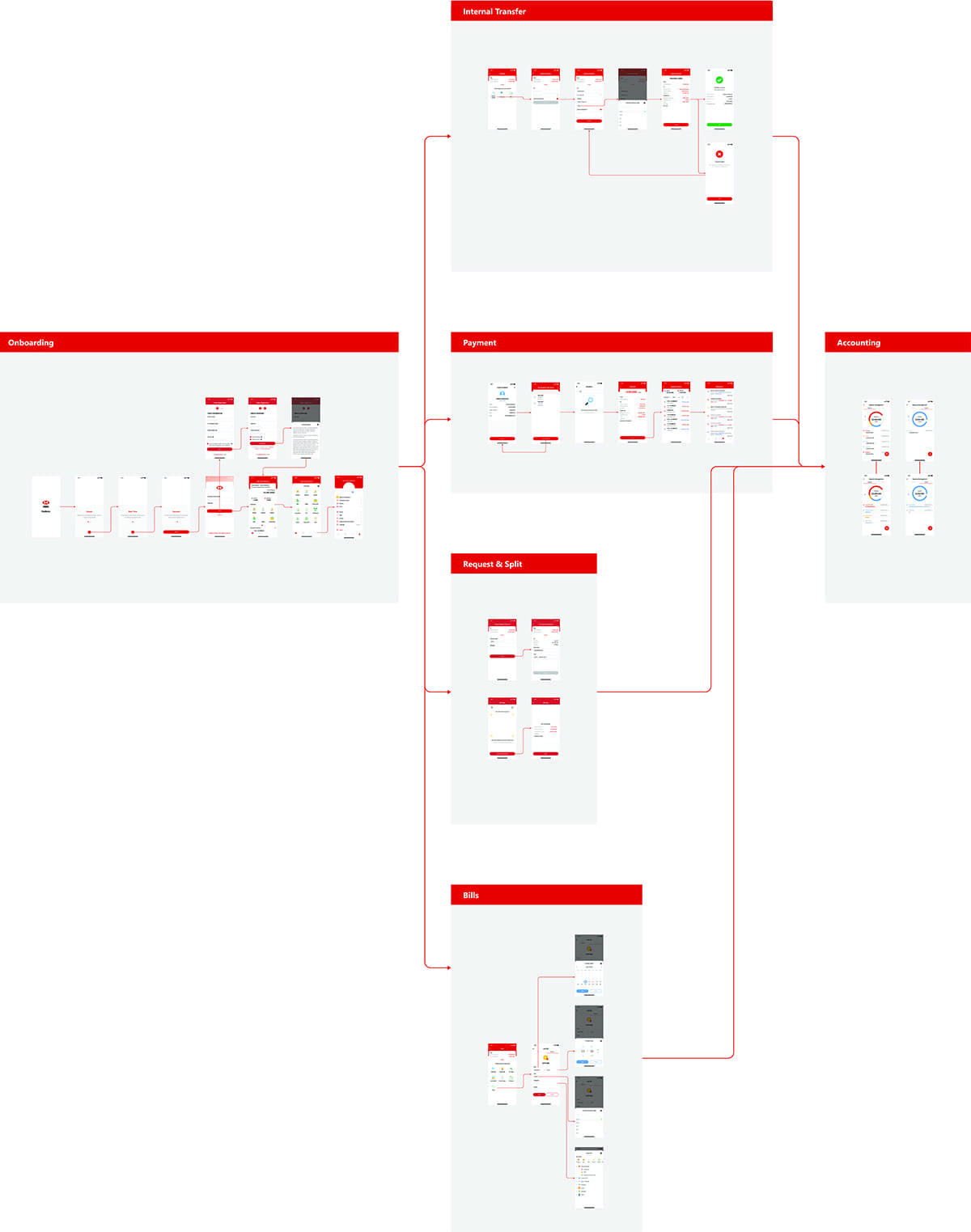
I created wireframes and facilitated workshops to gather feedback. I updated the wireframes and captured decisions in real time discussing in company internal meetings, which was extremely well received by the team.
03. Prototyping
I. Onboarding
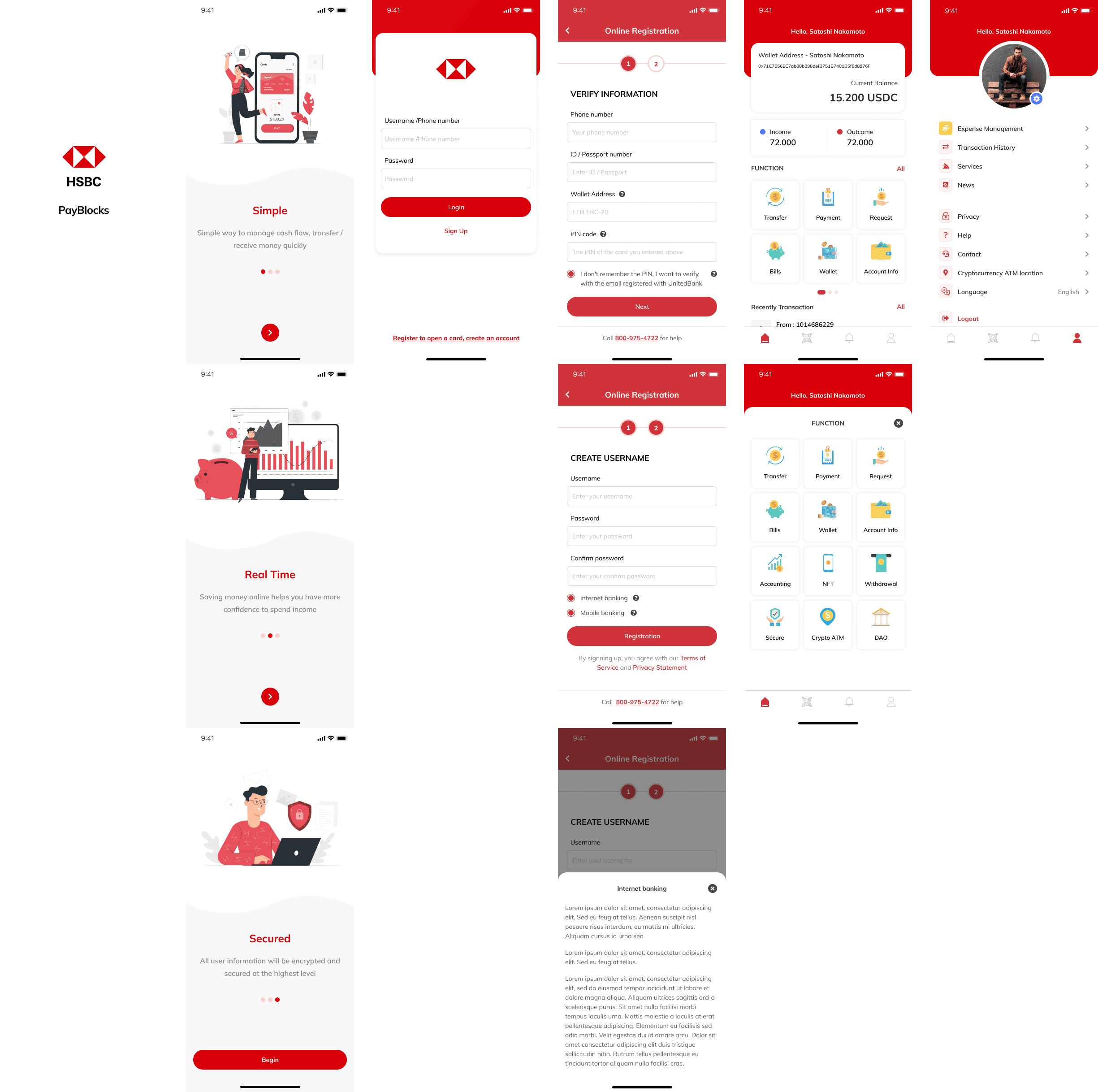
Compared with traditional mobile bank onboarding process, PayBlocks adopts a simple way by using users' crypto wallet addresses, yet gather necessary information including phone numbers and ID numbers to meet compliance requirements.
II. Internal Transfer
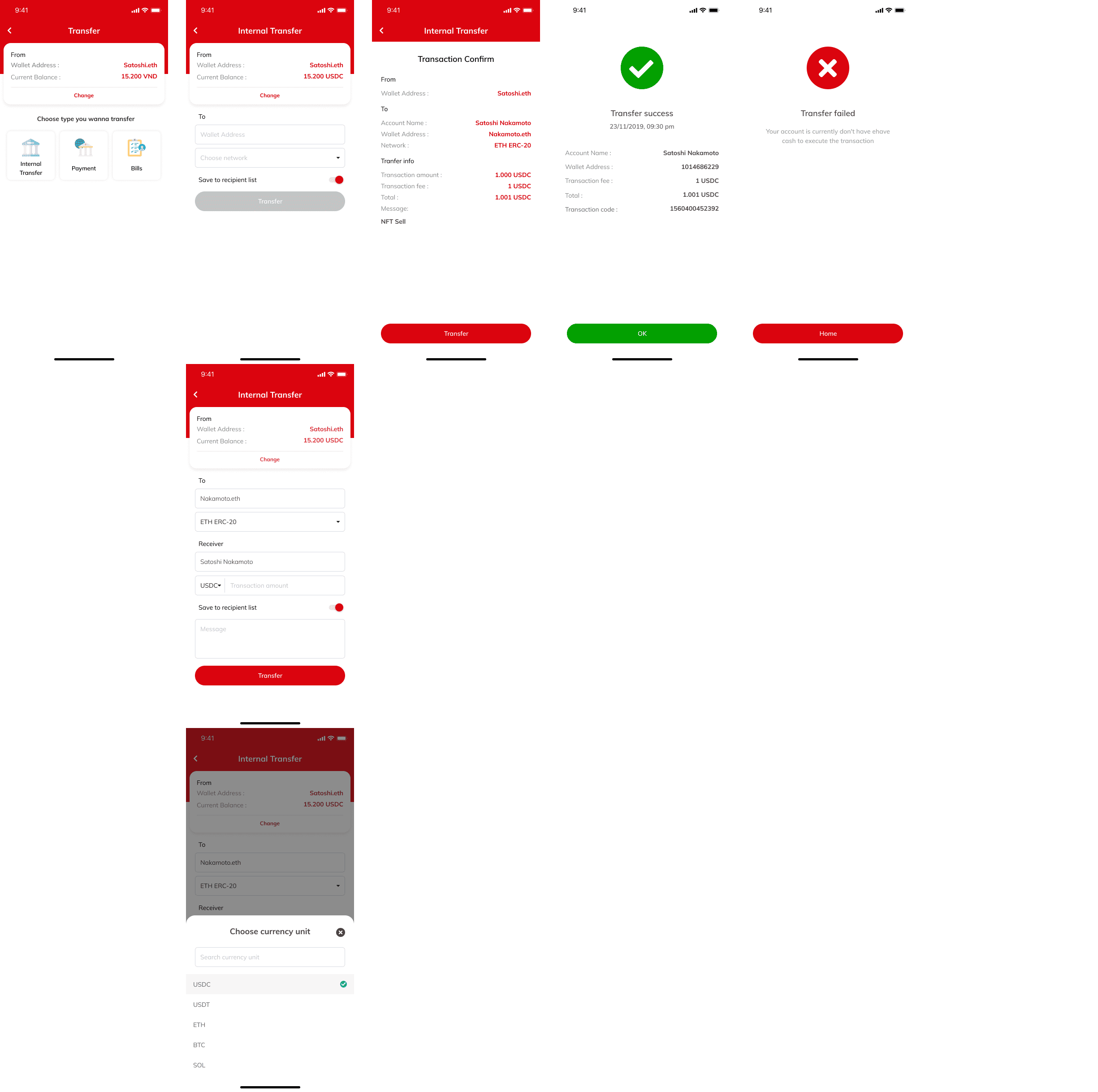
The Internal Transfer function is designed for users to transfer directly between their multiple wallets via PayBlocks, which costs less gas fees and shorter transaction times.
III. Payment
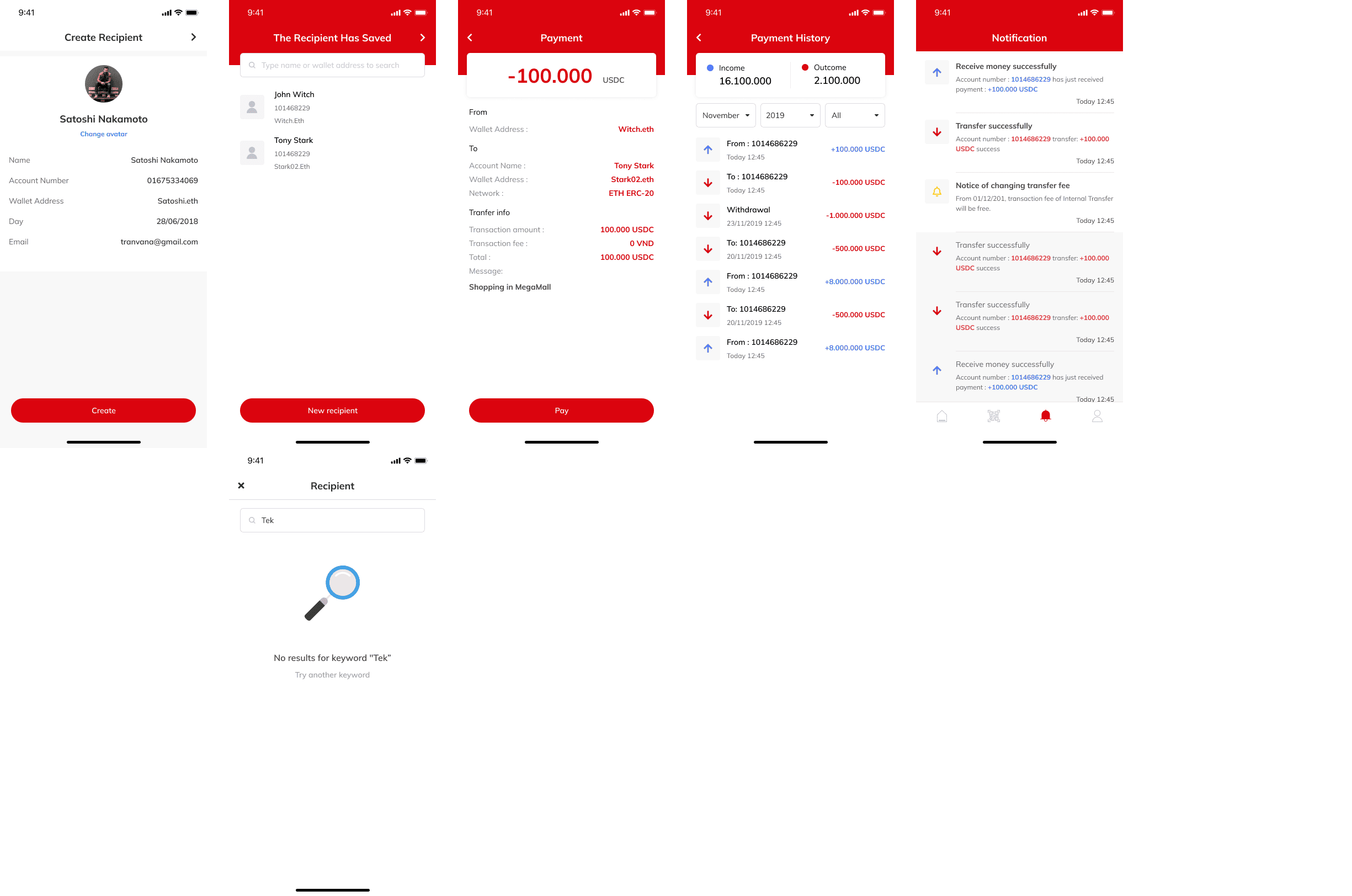
After researching users' needs, I added the Create Recipient function to the payment process. Users can easily pay their recipients without having to re-enter wallet addresses, which improves the payment efficiency and security.
IV. Request & Split
In addition to making payments, users can also request crypto from others or split bills. Two situations were considered: one is for online request or split, the other is for face-to-face QR code payment.

V. Bills
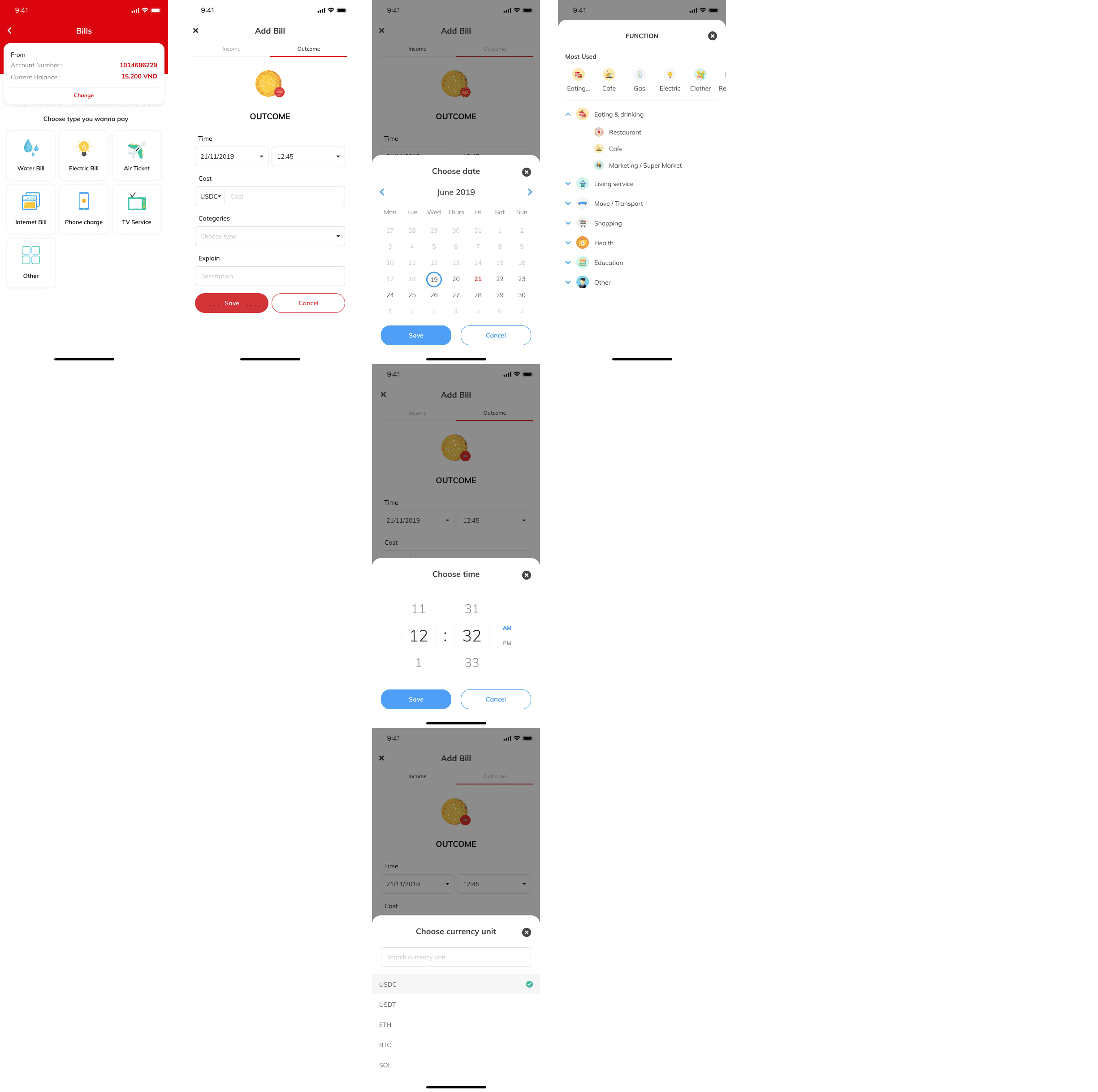
The Bills function is for users to make recurring payments in the case of periodic payments. I also designed bill categories for them to plan and manage bills.
VI. Accounting
PayBlocks provides the Accounting function to personal users. Drawn on advantages of traditional mobile banks, this function fits user habits for most new Web3 users and provides a powerful data visualization tool.

04. Impact & Reflections
I. Impact
Efficient crypto payment solutions are fundamental to banks' participation in the Web3 world. PayBlocks Banking aims to enable integrating C2C crypto payments for personal customers. In this way, it will play an important role as one of the infrastructures of crypto banking solutions.
For customers, the product enables them to make various types of C2C payment efficiently. For HSBC, the product provides an important infrastructure for any payment related banking solutions, at the same time, attracts a lot of potential customers adopting crypto. For Web3, the product provides a chance to onboard the next 1 billion Web3 residents.
II. Reflections
In this project I used my experience in crypto payments to help HSBC design the Web3 bank of the future. At the same time, I thought carefully about the differences between the use cases of banking and the services provided by a fintech company. I also examined the differences between B2B payments and C2C payments.
In cooperation with HSBC, I had an impressive journey of conducting banking solutions using Web3 technologies. I learned more about strategic problem solving, product management, and critical thinking skills in the process of improving customer experience, and identifying and enabling HSBC's growth priorities.