Self-Evolving AI Workbench
Independent project built with DeepSeek Harness · View on GitHub
Role: Product Designer & Prototyper
Software That Rewrites Itself
A friend mentioned that tapping a photo did nothing. The workbench picked up the message and added full-size previews.
Problem Space
When a friend tells me a photo won’t open, their message already tells me what they tried and what they expected. Moving it into a tracker means someone has to describe the same problem a second time.
I built twelve DeepSeek Harness plugins to try a shorter path. Could the conversation where we notice a problem also be where the product starts to change?
01. Three Ways Ideas Travel
A thought I save for later, something a friend says across the table, and a message they send me carry different clues. I wanted to keep those clues when I brought any of them into a question.
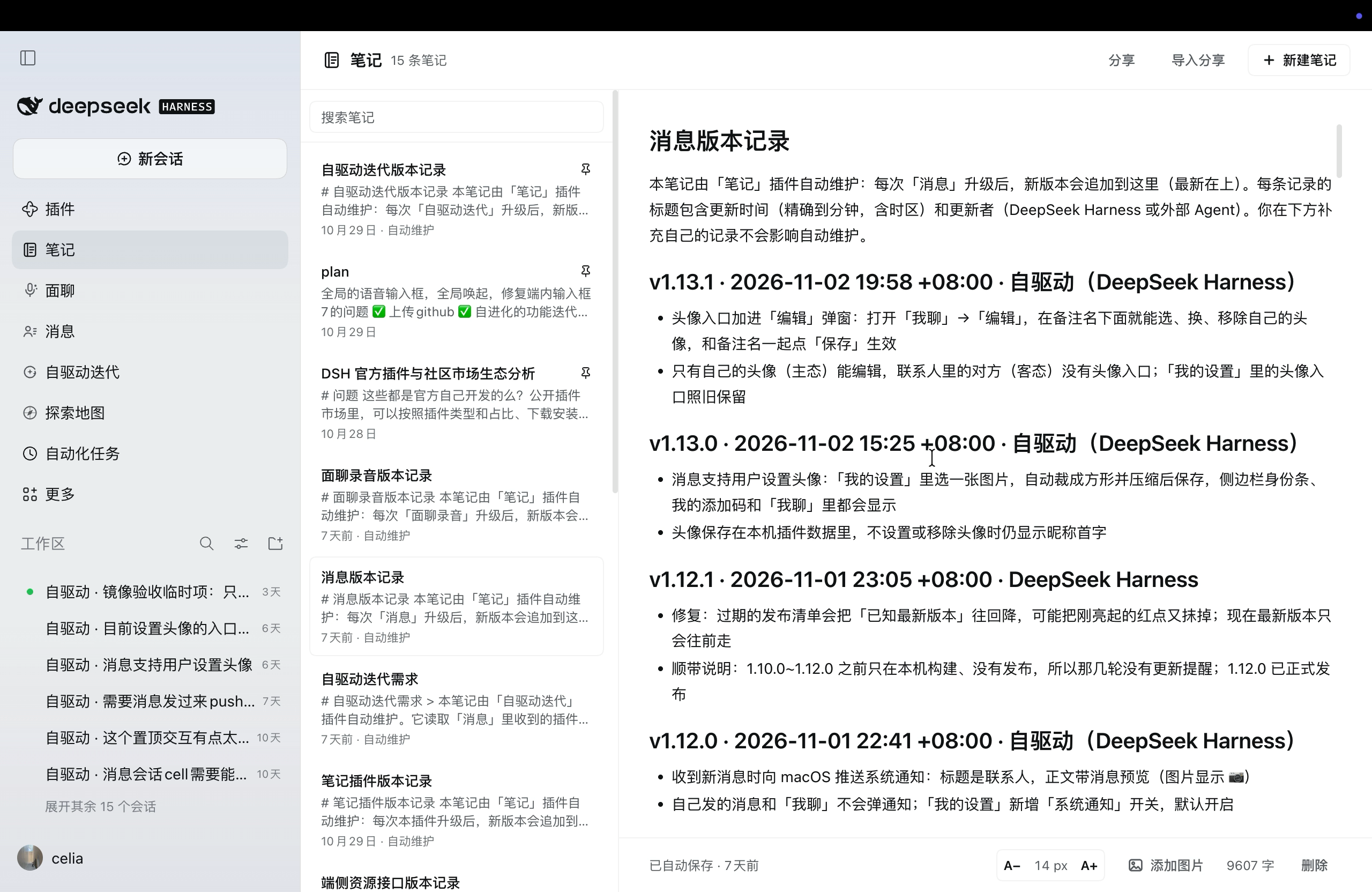
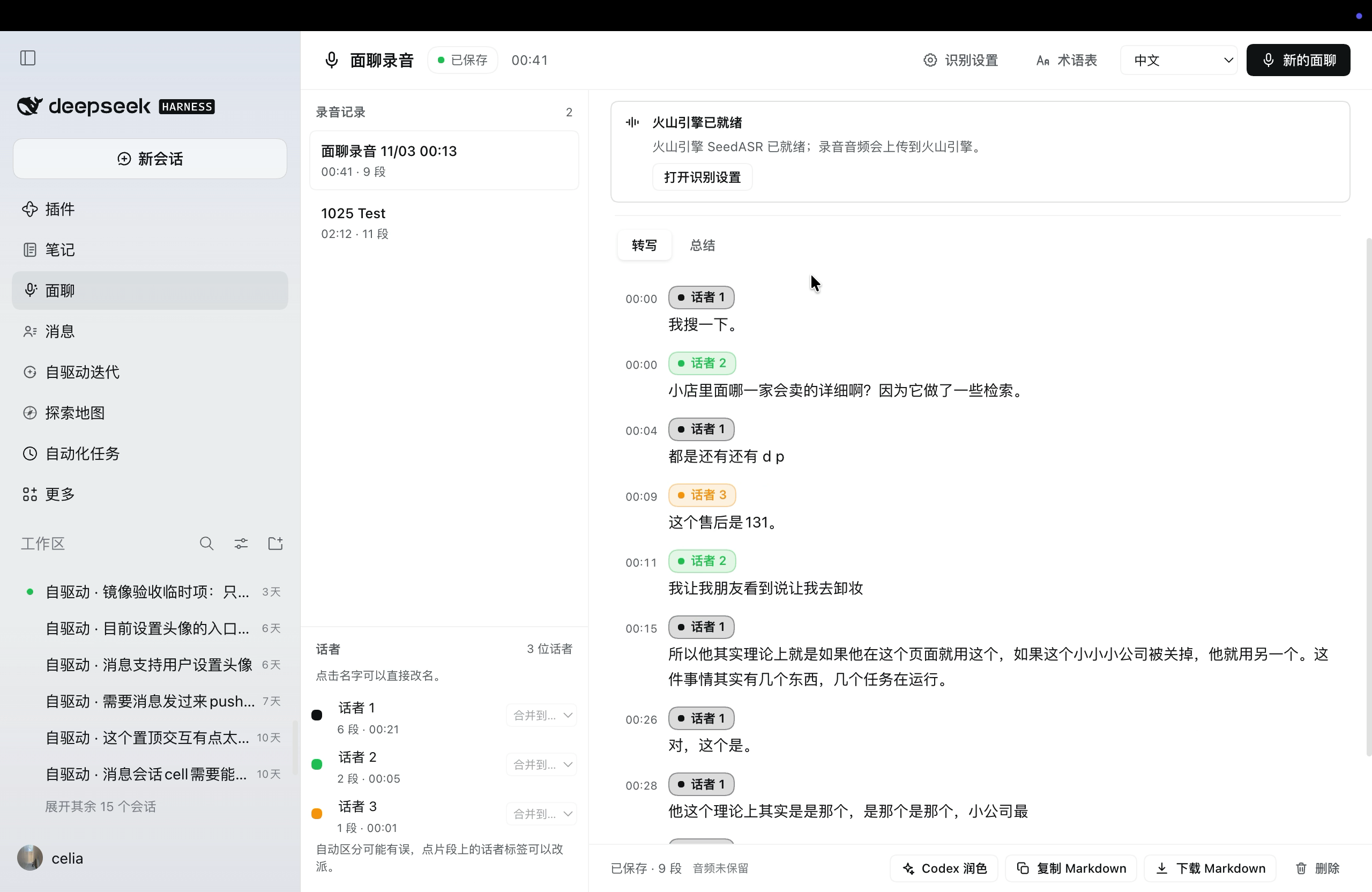
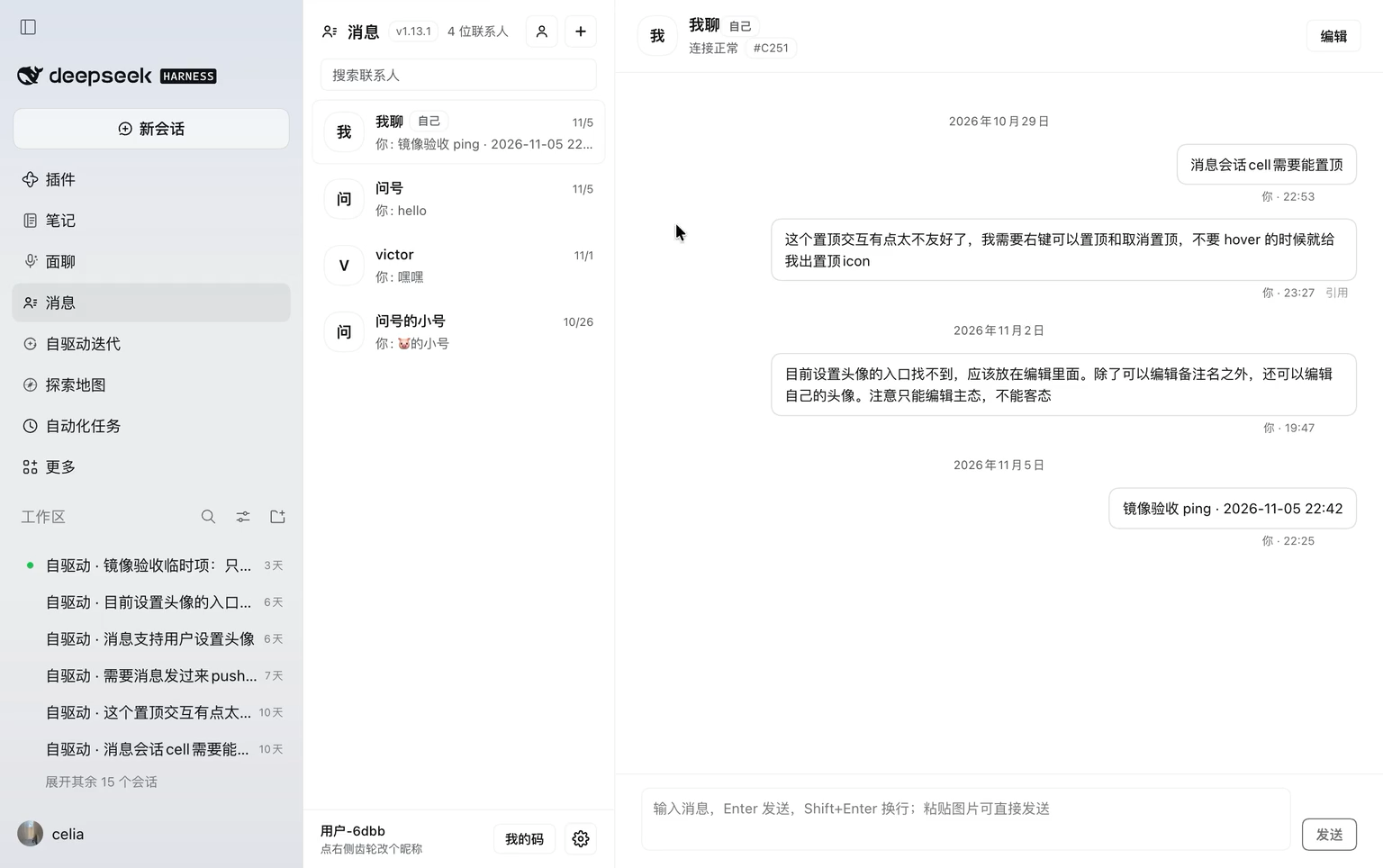
One way to ask across all three
If I want to compare a conversation with my notes, I type # and pick the recording and notes I mean. Each plugin keeps its own material. A shared search and read interface finds the items, and the composer reads their current text when I send. I see the sources I picked; I don’t have to paste them into the chat.
02. From a Message to a Release
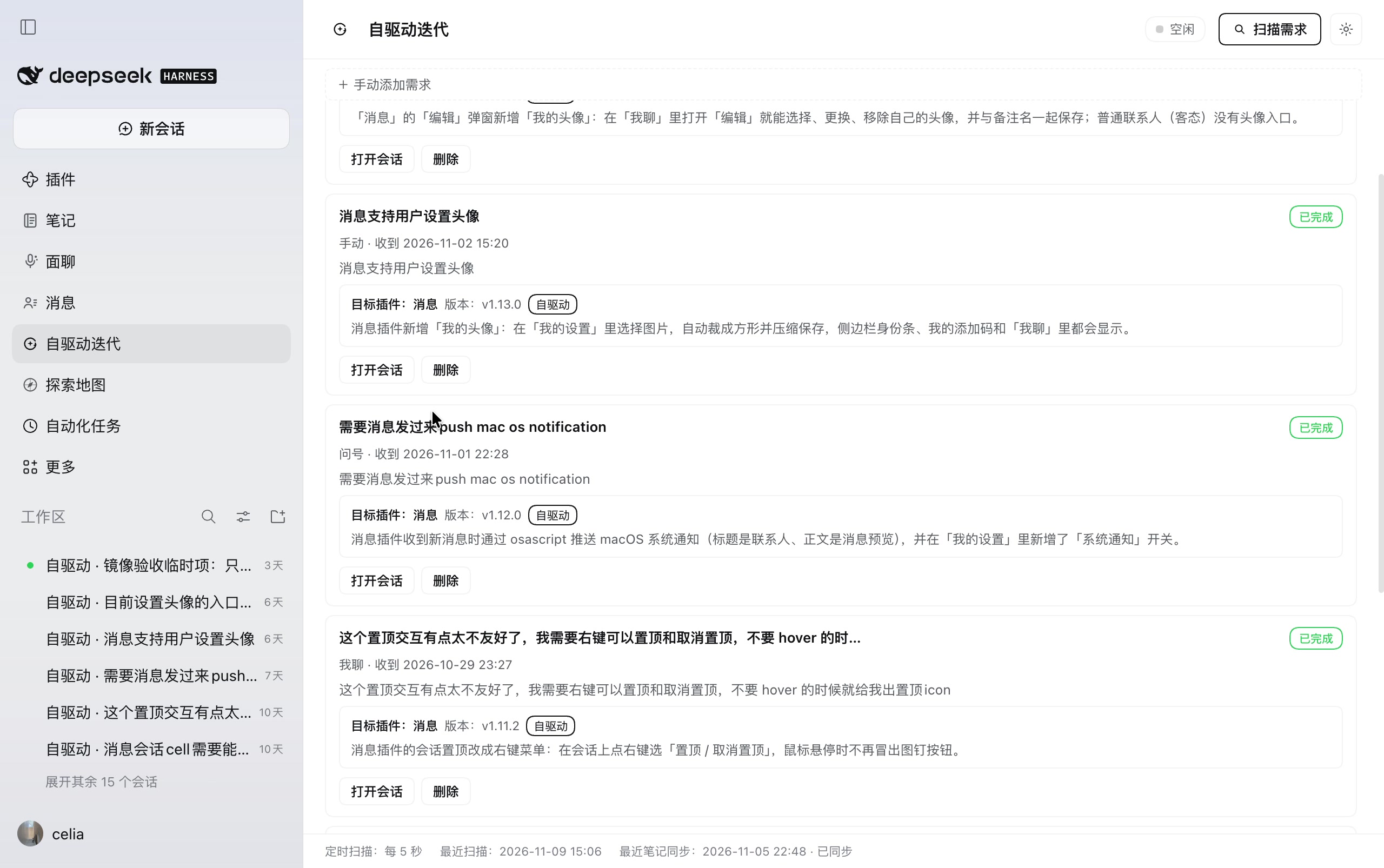
In the recording, I ask to edit my avatar alongside my name. The iteration plugin recognizes the message as a request. With automatic iteration on, it starts a DSH creation session to try the change. The trail ends in Notes: the release entry for Messages v1.13.1 puts avatar editing in the profile editor.
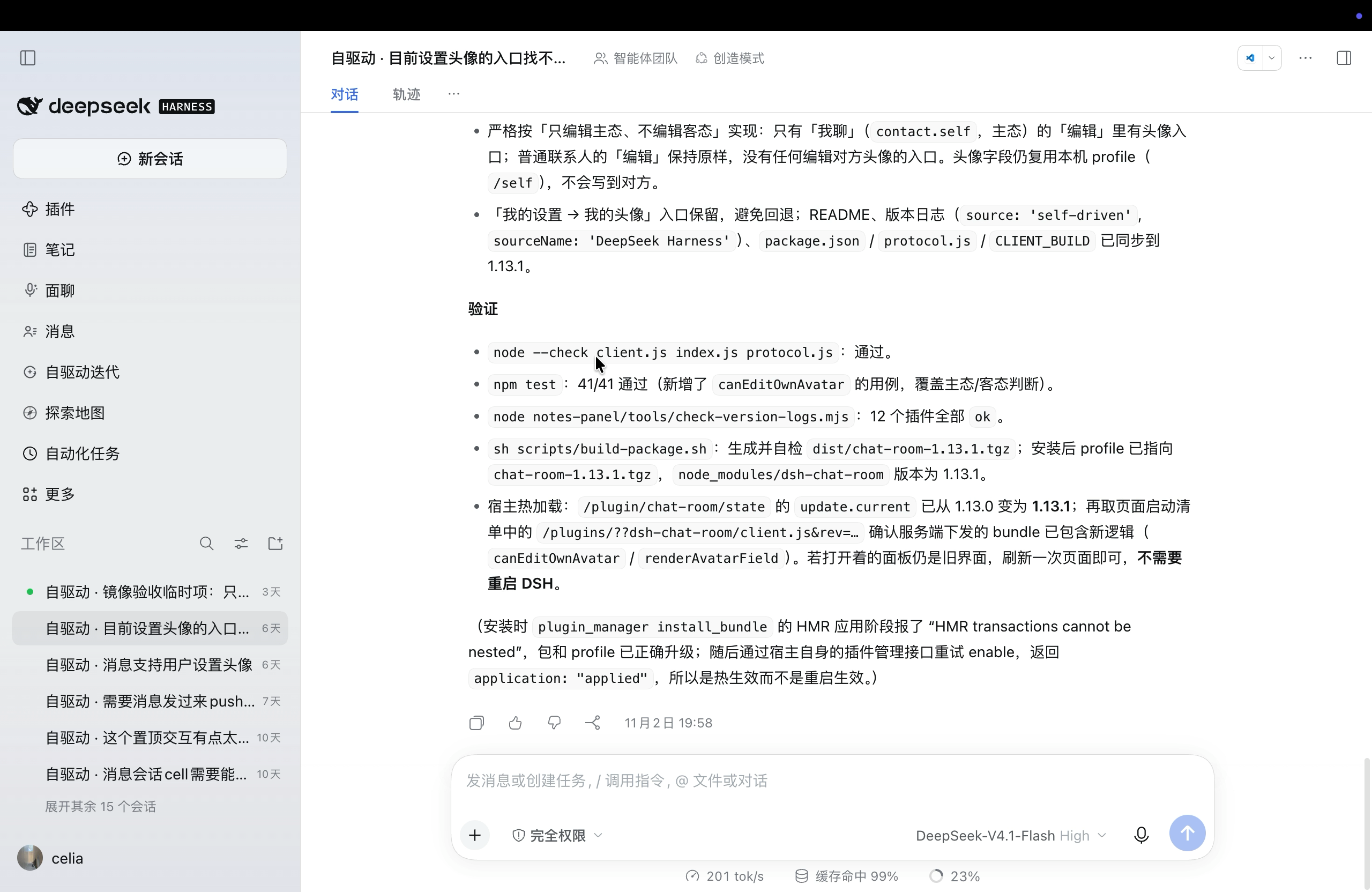
03. What Should a Changing Product Keep?
A familiar way to use new capabilities
The most useful part of the twelve-plugin experiment was deciding what each new plugin could rely on. If I add a reading list tomorrow, I want to find and cite a book the same way I cite a note. The designer’s job is to make that interaction hold up as the workspace grows.
A say in what changes
A greeting stays a greeting. Only messages that describe both a product and a problem or request become candidates. I can preview them before enabling automatic changes. The question I would test next: if I ask for larger type in a shared chat, can I tell whether it changes my view or everyone’s?
Mapping the experiments
I built Exploration Atlas to keep track of the decisions behind the plugins. Each stage pairs what I learned with something I can test next.
One distinction I wanted to test was seeing how an agent worked versus changing how it worked. The trajectory viewer shows the steps it took. Verify-before-Finish can ask it to take one more step if it edits a file and tries to finish without checking it.
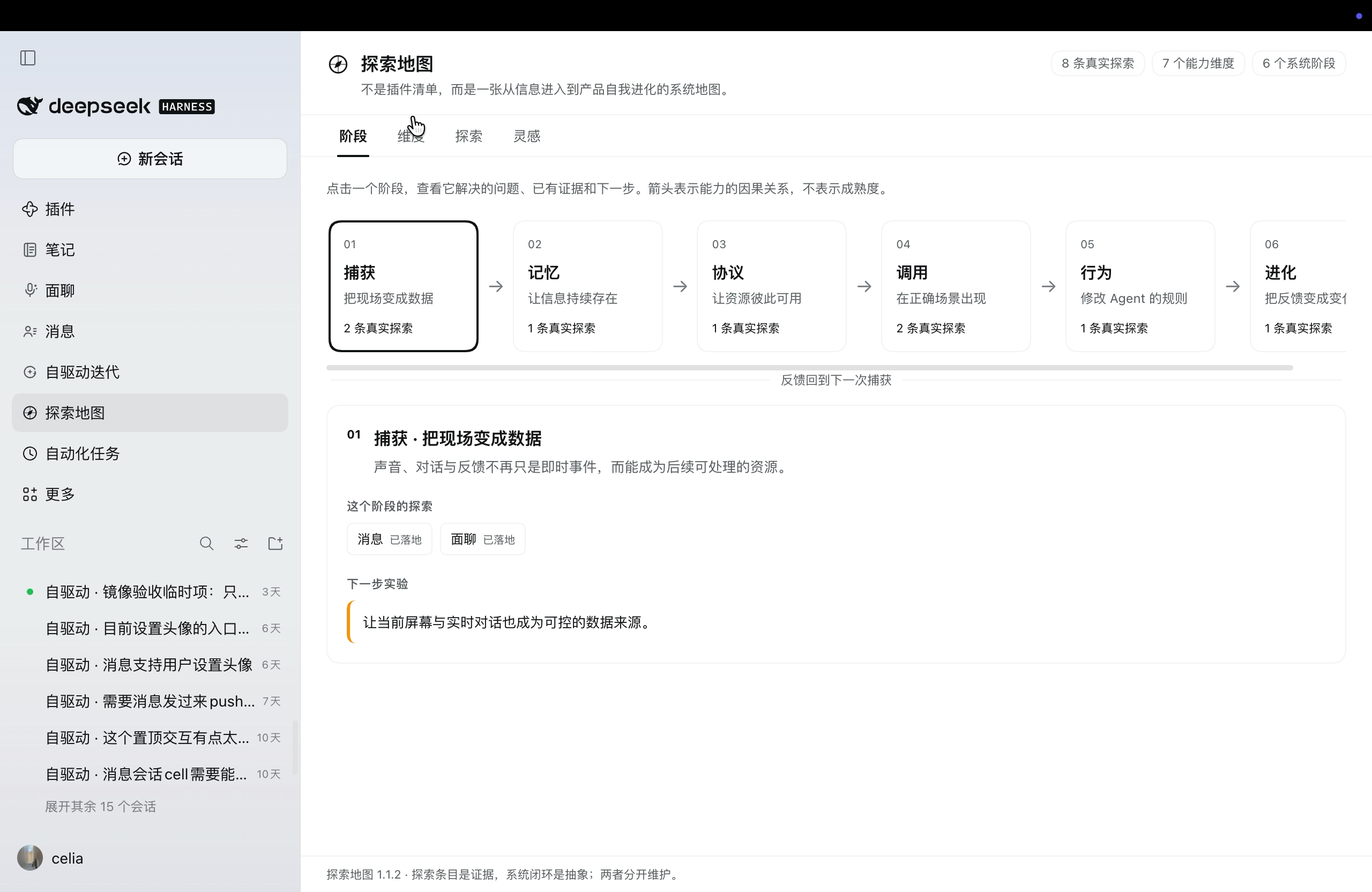
Inside the suite on GitHub: 5 workspace plugins · 3 context plugins · 4 agent plugins.